
Epitalon — Telomerase Activation & Aging Biology Research Peptide
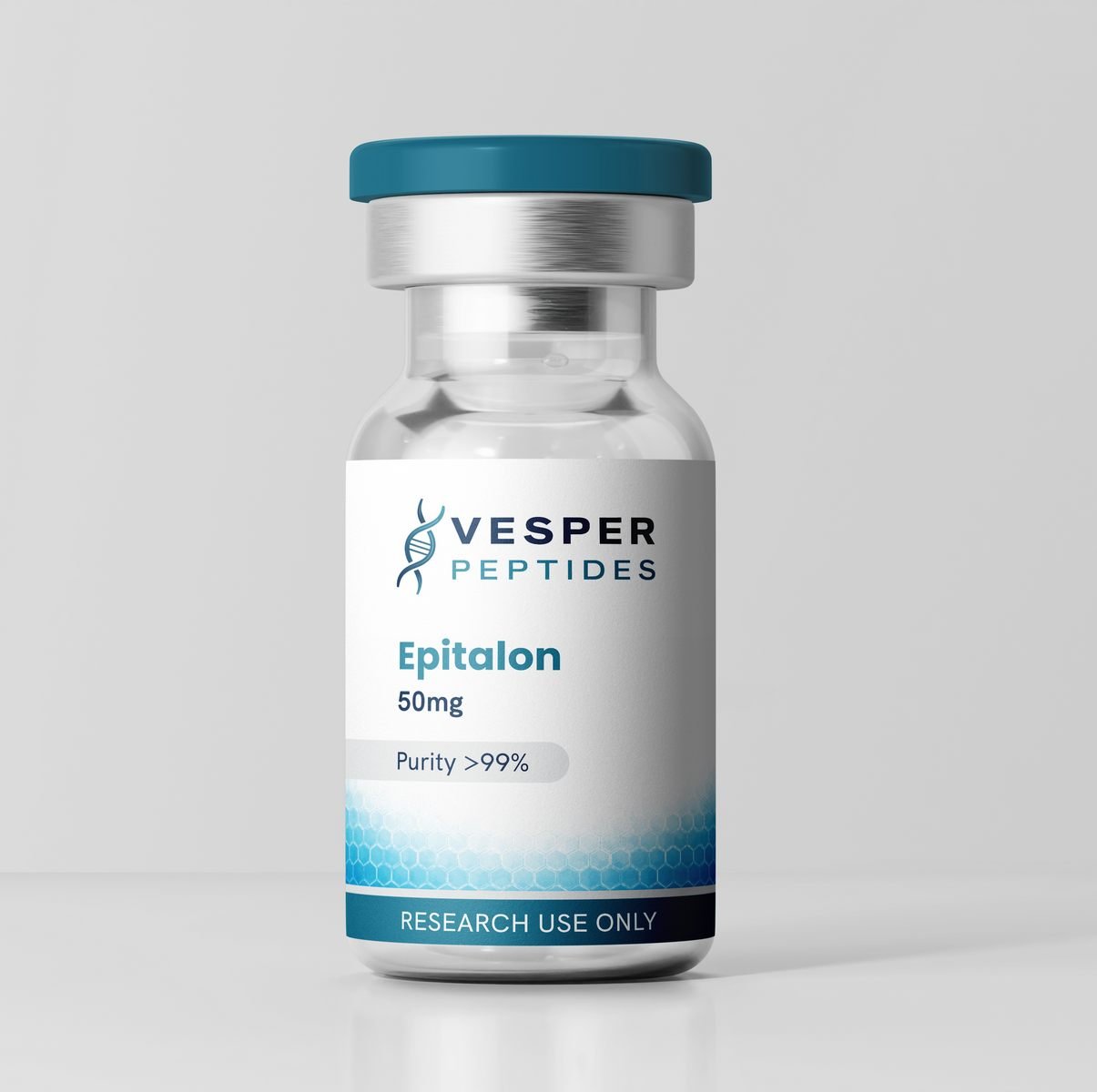
Epitalon (Ala-Glu-Asp-Gly) is a synthetic tetrapeptide identical in sequence to the active component of epithalamin — a polypeptide extract of the pineal gland. Researchers in geroscience, telomere biology, and neuroendocrinology use this Epitalon research peptide to study telomerase activation, telomere maintenance, and pineal gland regulatory function. Furthermore, the 50mg large-format vial supports extended experimental series and multi-arm study designs without requiring frequent reordering — a key practical advantage for longitudinal aging biology research programs.
Mechanism of Action
Telomerase activation — Epitalon actively stimulates telomerase (hTERT) expression in somatic cell models. Telomerase elongates telomeric repeat sequences at chromosome ends, counteracting the progressive telomere shortening that occurs with each cell division. As a result, researchers use it in studies examining telomere length dynamics, replicative senescence onset, and cellular lifespan regulation in primary fibroblast and epithelial cell systems.
Pineal and melatonin regulation — Epitalon modulates hypothalamic-pineal axis activity, influencing melatonin synthesis and secretion patterns. Furthermore, it promotes circadian rhythm-associated gene expression regulation in pineal cell research models. Consequently, researchers studying the intersection of pineal function and aging biology specifically include Epitalon in their experimental panels.
Antioxidant and gene expression effects — Epitalon demonstrates antioxidant activity and modulates the expression of genes associated with oxidative stress response and cellular aging. Additionally, studies report effects on p53 pathway regulation and cell cycle checkpoint gene expression in aging cell models.
Key Research Applications
- Telomere biology research — Studies examining hTERT activation kinetics, telomere length measurement, and replicative lifespan extension in primary somatic cell culture systems.
- Aging biology research — Preclinical aging models investigating Epitalon effects on cellular senescence markers, oxidative stress parameters, and aging-associated gene expression profiles.
- Pineal and melatonin research — Studies examining Epitalon modulation of melatonin synthesis, circadian gene expression, and hypothalamic-pineal axis regulation.
- Antioxidant mechanism research — Investigation of Epitalon effects on intracellular ROS levels, antioxidant enzyme expression, and oxidative damage biomarkers in aging cell systems.
- Comparative longevity research — Experimental designs pairing Epitalon with other longevity compounds such as FOXO4-DRI, SS-31, and NAD+ to study complementary aging biology mechanisms in integrated research protocols.
Peptide Profile
| Parameter | Detail |
|---|---|
| Common Name | Epitalon / Epithalon |
| Sequence | Ala-Glu-Asp-Gly |
| Derived From | Pineal gland epithalamin extract |
| Key Targets | hTERT (telomerase), pineal melatonin axis |
| Molecular Weight | ~390 Da |
| Form | Lyophilized powder |
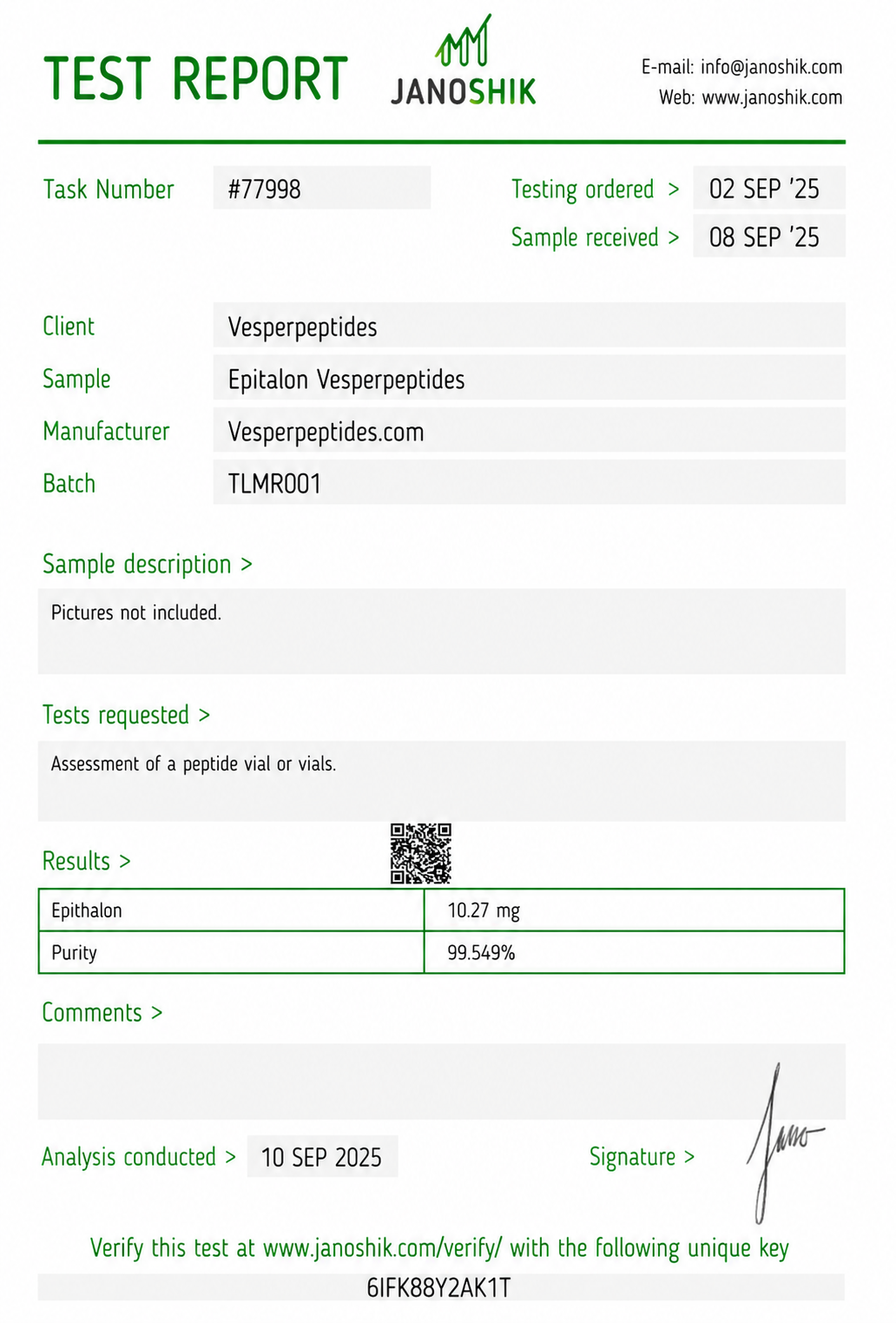
| Purity | ≥98% (HPLC verified) |
| Available Size | 50mg |
| Storage | −20°C (lyophilized); 4°C (reconstituted) |
| Reconstitution | Sterile bacteriostatic water |
| Solubility | Freely water-soluble |
Reconstitution & Storage
Reconstitute with sterile bacteriostatic water. Epitalon is freely water-soluble and dissolves readily. Add solvent slowly along the vial wall and swirl gently. Store lyophilized vials at −20°C, protected from light. Once reconstituted, maintain at 4°C and use within 28–30 days. Prepare single-use aliquots to minimize freeze-thaw exposure across extended study series.
For research use only. Not intended for human or veterinary administration.
Reviews
There are no reviews yet.