
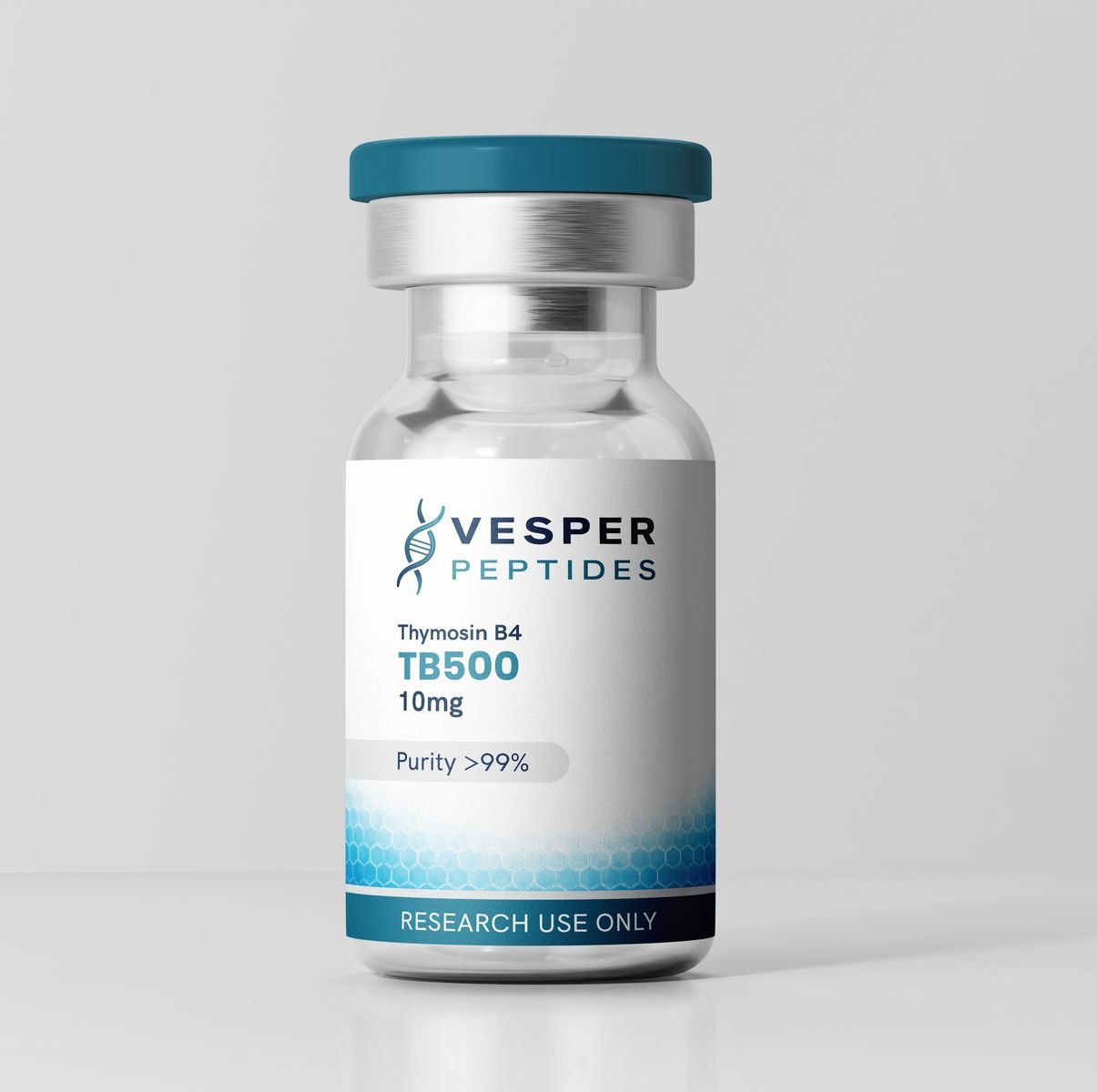
TB-500 — Thymosin Beta-4 Synthetic Fragment Research Peptide
TB-500 is a synthetic peptide corresponding to the active actin-binding region of Thymosin Beta-4 (Tβ4), a ubiquitously expressed 43-amino acid protein that regulates actin dynamics, cell migration, and tissue repair. Researchers in cardiovascular biology, musculoskeletal repair science, and regenerative medicine use this TB-500 research peptide to study cytoskeletal organization, angiogenesis, cardiac repair signaling, and extracellular matrix remodeling in preclinical and cell-based experimental systems. Furthermore, TB-500’s central role in regulating G-actin sequestration makes it a uniquely valuable tool for studying how cytoskeletal dynamics drive tissue repair and regeneration responses.
Mechanism of Action
TB-500 exerts its biological effects through several interconnected mechanisms that collectively promote tissue repair and cellular regeneration.
Actin sequestration and cytoskeletal regulation — TB-500 binds G-actin monomers through its LKKTET actin-binding domain, preventing their polymerization into F-actin filaments. This G-actin sequestration activity regulates the actin monomer pool available for cytoskeletal dynamics. Consequently, it modulates cell shape, motility, and the cytoskeletal reorganization required for effective cell migration to injury sites.
AKT pathway activation — TB-500 activates the PI3K/AKT signaling cascade in repair-responsive cells. AKT activation promotes cell survival, proliferation, and migration in injured tissue. Furthermore, it activates downstream effectors that drive extracellular matrix remodeling through MMP regulation and collagen deposition.
Angiogenesis promotion — TB-500 stimulates endothelial cell migration and tube formation, promoting neovascularization at injury sites. As a result, it improves blood supply to healing tissue — a critical factor in sustaining the metabolic demands of active tissue repair.
Cardiovascular repair — TB-500 demonstrates cardioprotective properties in preclinical ischemia models. It promotes cardiomyocyte survival, reduces apoptosis in the ischemic border zone, and supports cardiac progenitor cell recruitment and differentiation. Therefore, researchers studying myocardial repair specifically include TB-500 in their experimental compound panels.
Key Research Applications
- Cytoskeletal dynamics research — Studies examining G-actin sequestration, F-actin polymerization regulation, and cell migration mechanisms in wound healing and tissue repair model systems.
- Cardiovascular repair research — Preclinical models investigating TB-500 effects on cardiomyocyte survival, cardiac progenitor recruitment, and myocardial function following ischemia-reperfusion injury.
- Tendon and muscle repair research — Studies examining TB-500-driven tenocyte and myoblast migration, extracellular matrix remodeling, and angiogenesis in musculoskeletal injury models.
- Angiogenesis research — Investigation of TB-500-stimulated endothelial cell migration, tube formation, and neovascularization in wound healing and ischemic tissue models.
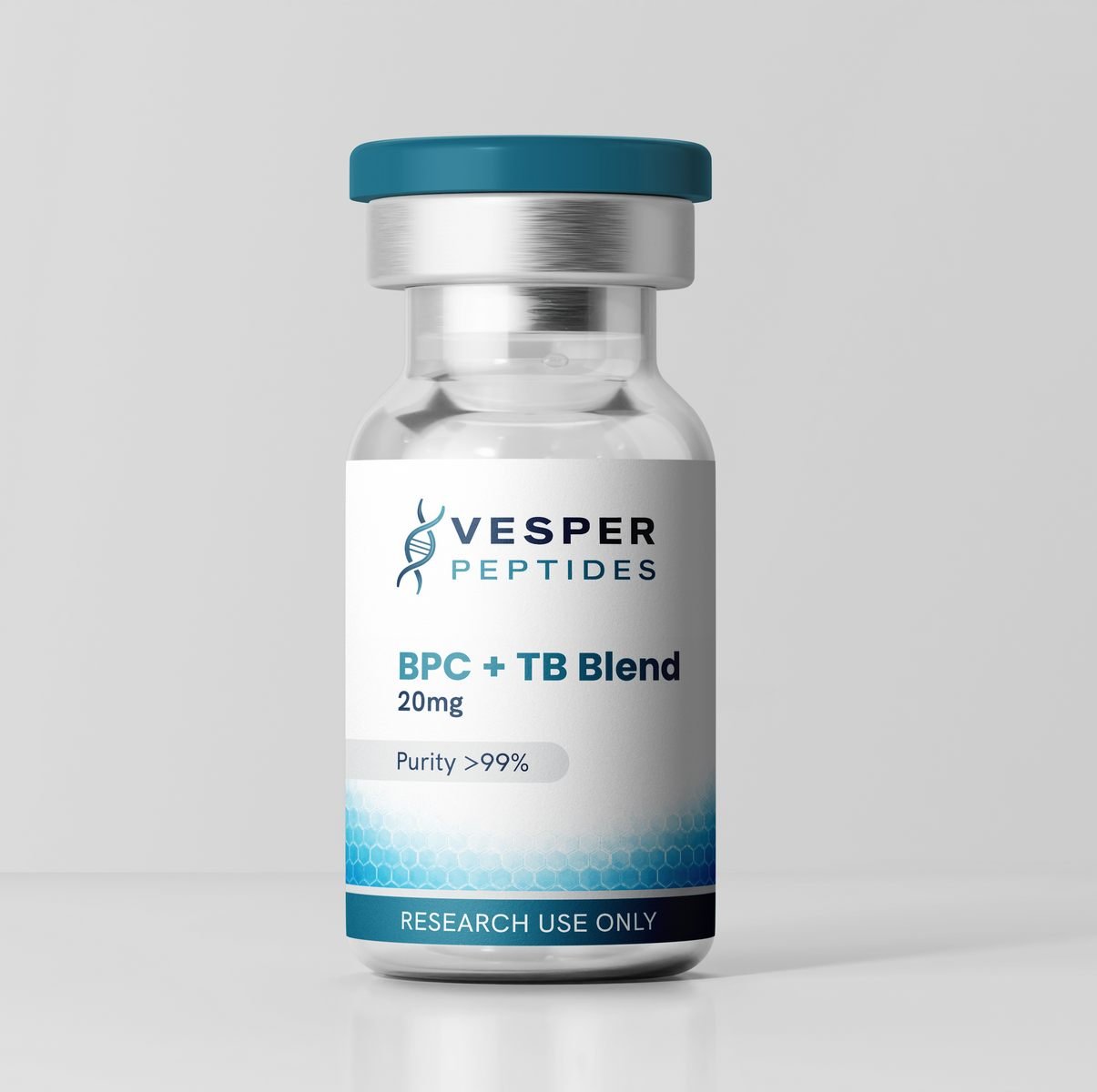
- Comparative repair peptide research — Benchmarking TB-500 against BPC-157 and the BPC + TB Blend to characterize the distinct and synergistic contributions of actin-sequestering versus VEGF-mediated repair mechanisms.
Peptide Profile
| Parameter | Detail |
|---|---|
| Common Name | TB-500 |
| Full Name | Thymosin Beta-4 synthetic fragment |
| Active Domain | LKKTET actin-binding sequence |
| Key Pathways | Actin sequestration, PI3K/AKT, MMP regulation, angiogenesis |
| Molecular Weight | ~4,964 Da |
| Form | Lyophilized powder |
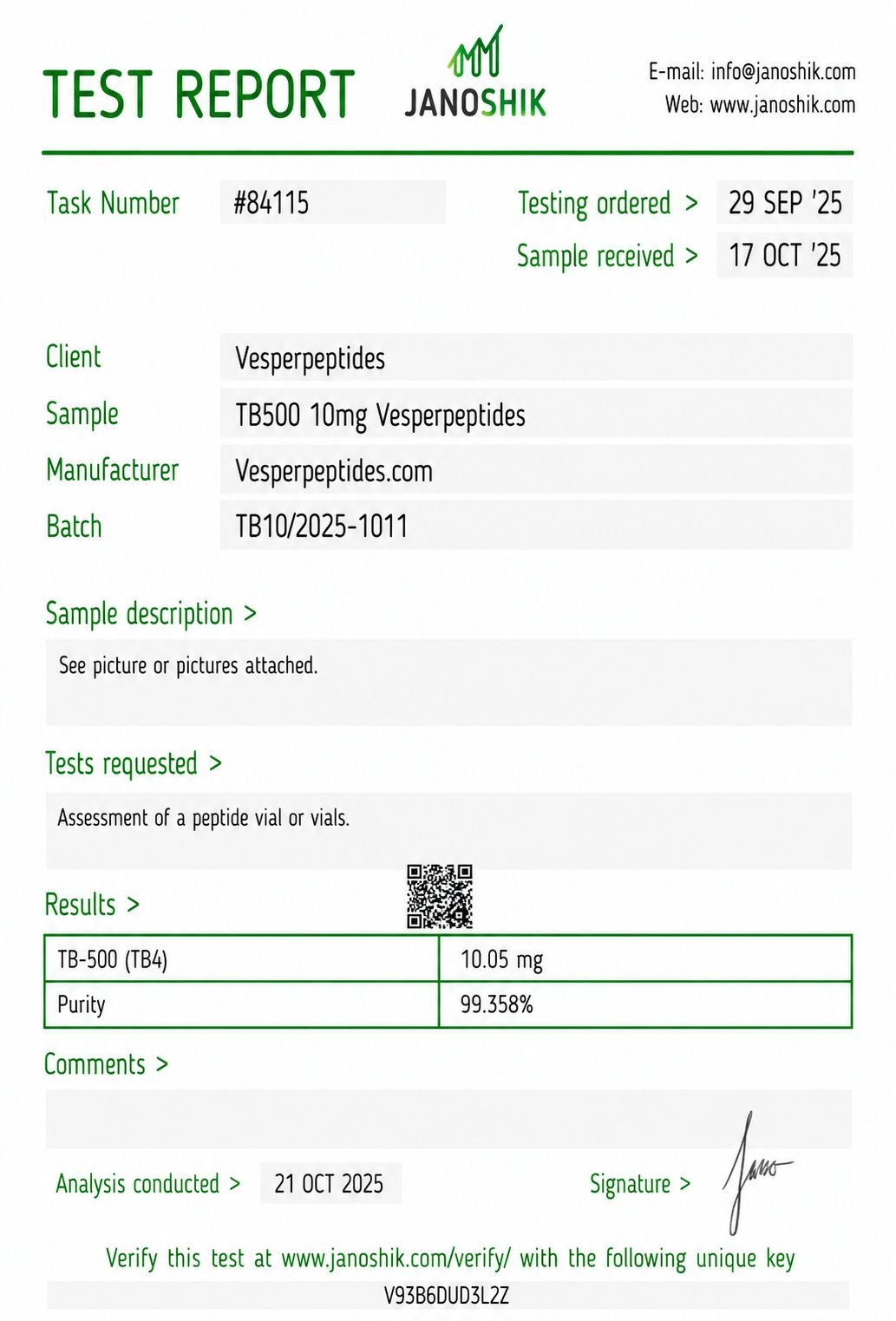
| Purity | ≥98% (HPLC verified) |
| Available Size | 10mg |
| Storage | −20°C (lyophilized); 4°C (reconstituted) |
| Reconstitution | Sterile bacteriostatic water |
Reconstitution & Storage
Reconstitute with sterile bacteriostatic water. TB-500 is highly water-soluble and dissolves readily. Add solvent slowly along the vial wall and swirl gently until dissolved. Store lyophilized vials at −20°C. Once reconstituted, maintain at 4°C and use within 28–30 days. Avoid repeated freeze-thaw cycles.
For research use only. Not intended for human or veterinary administration.
Reviews
There are no reviews yet.