
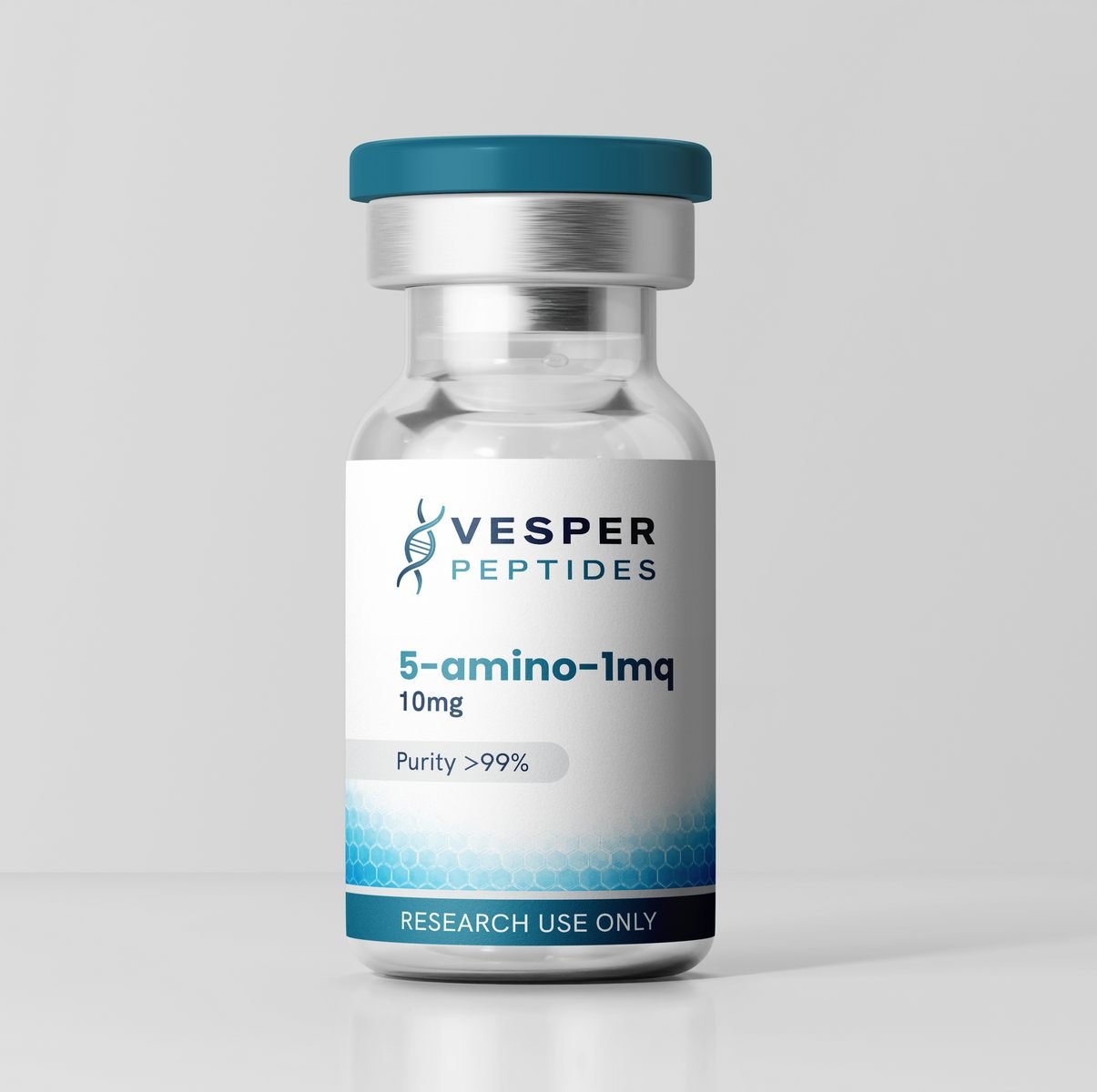
5-Amino-1MQ — NNMT Inhibitor Research Compound for NAD+ and Adipogenesis Research
5-amino-1MQ (5-amino-1-methylquinolinium) is a small molecule inhibitor of nicotinamide N-methyltransferase (NNMT), a cytosolic enzyme that catalyses the N-methylation of nicotinamide using S-adenosylmethionine (SAM) as the methyl donor. Researchers in metabolic biology, adipocyte science, and NAD+ biology use this 5-amino-1MQ research compound to investigate the downstream consequences of NNMT inhibition — including elevated intracellular NAD+ levels, reduced adipogenesis, and enhanced mitochondrial function. Furthermore, its highly selective mechanism makes it a precise pharmacological tool for dissecting the specific contribution of NNMT activity to metabolic regulation, independent of broader methylation pathway interference.
Mechanism of Action
NNMT converts nicotinamide — a NAD+ precursor — into 1-methylnicotinamide (MNA), effectively diverting it away from the NAD+ biosynthesis salvage pathway. This diversion reduces the availability of nicotinamide for NAMPT-catalysed conversion to NMN and subsequently to NAD+. As a result, elevated NNMT activity in tissues such as white adipose tissue (WAT) and liver correlates with reduced intracellular NAD+ levels, suppressed sirtuin activity, and impaired mitochondrial function.
5-amino-1MQ competitively inhibits NNMT by occupying its nicotinamide binding site. Consequently, it prevents nicotinamide methylation and redirects nicotinamide back into the NAD+ salvage pathway. This raises intracellular NAD+ concentrations, restores sirtuin deacylase activity, and enhances mitochondrial bioenergetics in NNMT-expressing cell systems. Additionally, NNMT inhibition reduces the consumption of SAM — the universal methyl donor — which has downstream effects on broader cellular methylation reactions. Therefore, researchers also use this NNMT inhibitor research compound to study SAM-dependent methylation biology alongside NAD+ metabolism.
NNMT in Adipose Tissue Biology
NNMT is highly expressed in white adipose tissue (WAT) and plays a significant role in regulating adipogenesis and adipocyte metabolism. High NNMT activity in WAT promotes adipocyte differentiation, increases lipid accumulation, and suppresses mitochondrial oxidative capacity. Furthermore, elevated NNMT expression correlates with obesity-associated metabolic dysfunction in preclinical models.
5-amino-1MQ inhibits these NNMT-driven adipogenic effects directly. By blocking NNMT, it reduces the epigenetic and metabolic conditions that favour adipocyte differentiation and lipid storage. As a result, researchers use it as a selective tool to study how NNMT activity regulates the transition from preadipocyte to mature adipocyte — and to investigate potential intervention points within this pathway.
Key Research Applications
Researchers actively use 5-amino-1MQ across several specialized metabolic and cellular research domains. Specifically, it supports:
- NNMT inhibition research — Characterization of NNMT enzyme kinetics, inhibitor binding affinity, and selectivity profiling against related methyltransferases in biochemical and cell-based assay systems.
- NAD+ metabolism research — Studies examining the effect of NNMT inhibition on intracellular NAD+ pools, NAD+/NADH ratios, and downstream sirtuin deacylase activity in adipocytes, hepatocytes, and muscle cell models.
- Adipogenesis regulation studies — Investigation of NNMT’s role in preadipocyte differentiation, lipid droplet accumulation, and adipocyte gene expression programs in primary and cell line adipocyte models.
- Mitochondrial function research — Studies examining how NNMT inhibition affects mitochondrial membrane potential, oxidative phosphorylation efficiency, and mitochondrial network morphology in metabolically active cell types.
- SAM and methylation biology — Research into how NNMT inhibition alters SAM availability and its downstream effects on histone methylation, DNA methylation, and broader epigenetic regulation in metabolic cell systems.
- Metabolic disease models — Use of 5-amino-1MQ as a pharmacological tool to investigate NNMT pathway dysfunction in obesity, insulin resistance, and non-alcoholic fatty liver disease (NAFLD) preclinical models.
- Comparative NAD+ research — Experimental designs pairing 5-amino-1MQ with direct NAD+ supplementation or other NAD+-boosting compounds to compare indirect NNMT inhibition versus direct NAD+ repletion strategies on downstream sirtuin and mitochondrial endpoints.
Selectivity and Research Advantages
5-amino-1MQ demonstrates selectivity for NNMT over other nicotinamide-binding methyltransferases. This selectivity is an important feature for researchers who need to attribute observed experimental effects specifically to NNMT inhibition rather than to off-target methyltransferase interference. Furthermore, its cell permeability enables direct application in intact cell systems without requiring specialized delivery vehicles — a practical advantage over less membrane-permeable NNMT inhibitor tool compounds. Consequently, it integrates cleanly into standard cell culture experimental workflows.
Compound Profile
| Parameter | Detail |
|---|---|
| Common Name | 5-amino-1MQ |
| Full Name | 5-Amino-1-methylquinolinium |
| Primary Target | Nicotinamide N-methyltransferase (NNMT) |
| Mechanism Class | Competitive NNMT inhibitor |
| Cell Permeable | Yes |
| Molecular Weight | 175.21 Da |
| Form | Lyophilized powder |
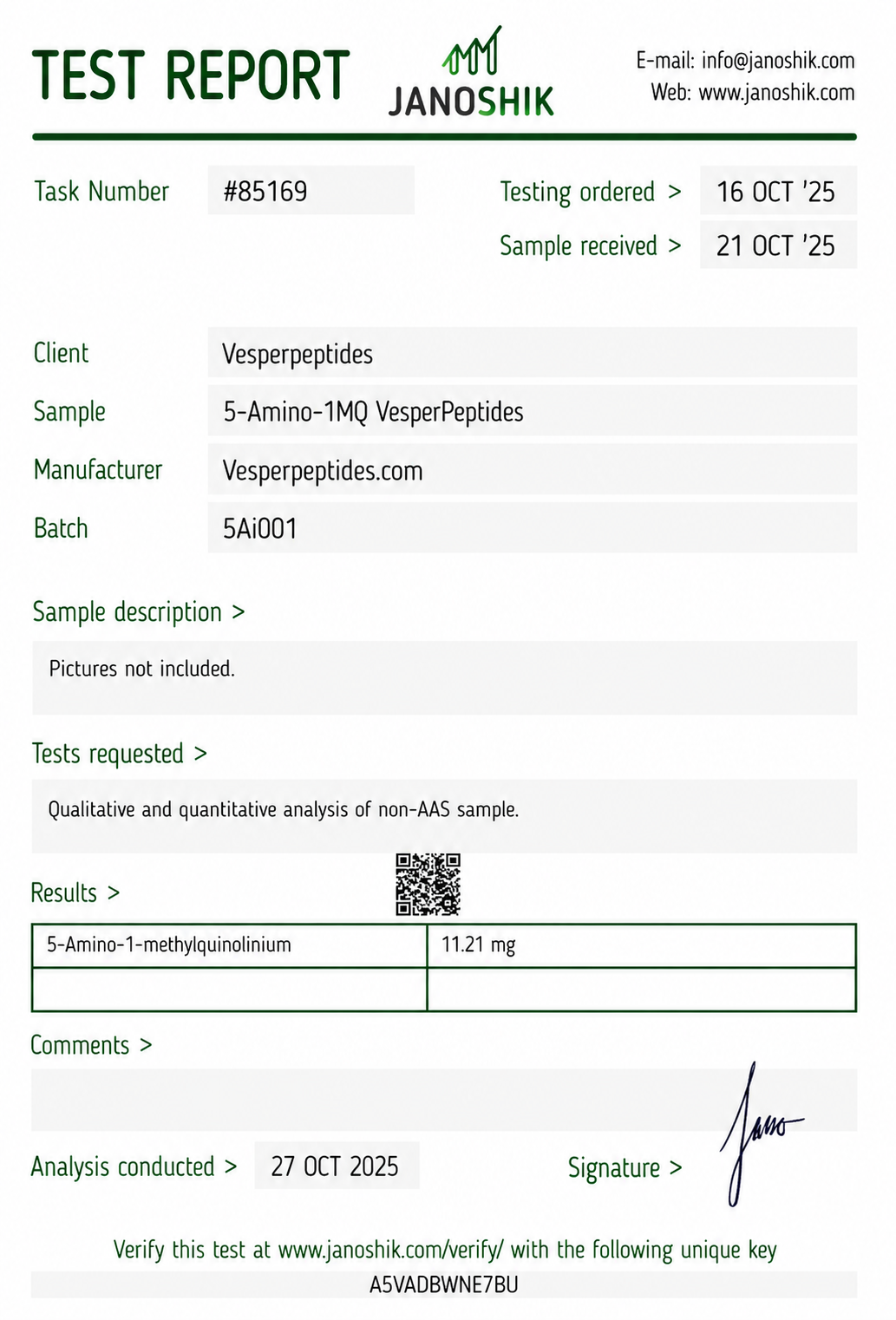
| Purity | ≥98% (HPLC verified) |
| Available Size | 10mg |
| Storage | −20°C (lyophilized); 4°C (reconstituted) |
| Reconstitution | Sterile water, PBS, or DMSO (if required) |
| Solubility | Water-soluble; DMSO stock compatible |
Reconstitution Guidelines
Reconstitute 5-amino-1MQ with sterile water or phosphate-buffered saline for aqueous working solutions. Alternatively, prepare a concentrated DMSO stock solution for applications requiring higher compound concentrations or extended stock stability. For aqueous reconstitution of a 10mg vial, researchers typically prepare a 10–50mM stock solution depending on assay requirements. Furthermore, prepare single-use aliquots before storage to minimize repeated freeze-thaw exposure across extended experimental series.
Storage Conditions
Store lyophilized 5-amino-1MQ at −20°C, protected from light and moisture. Furthermore, keep vials sealed until the point of reconstitution. Once reconstituted in aqueous solution, store at 4°C and use within 14–28 days. DMSO stock solutions store stably at −20°C for extended periods. Avoid repeated freeze-thaw cycles to maintain compound integrity and NNMT inhibitory activity throughout the study.
For research use only. Not intended for human or veterinary administration. This product is not a drug, supplement, or food product.
Reviews
There are no reviews yet.