
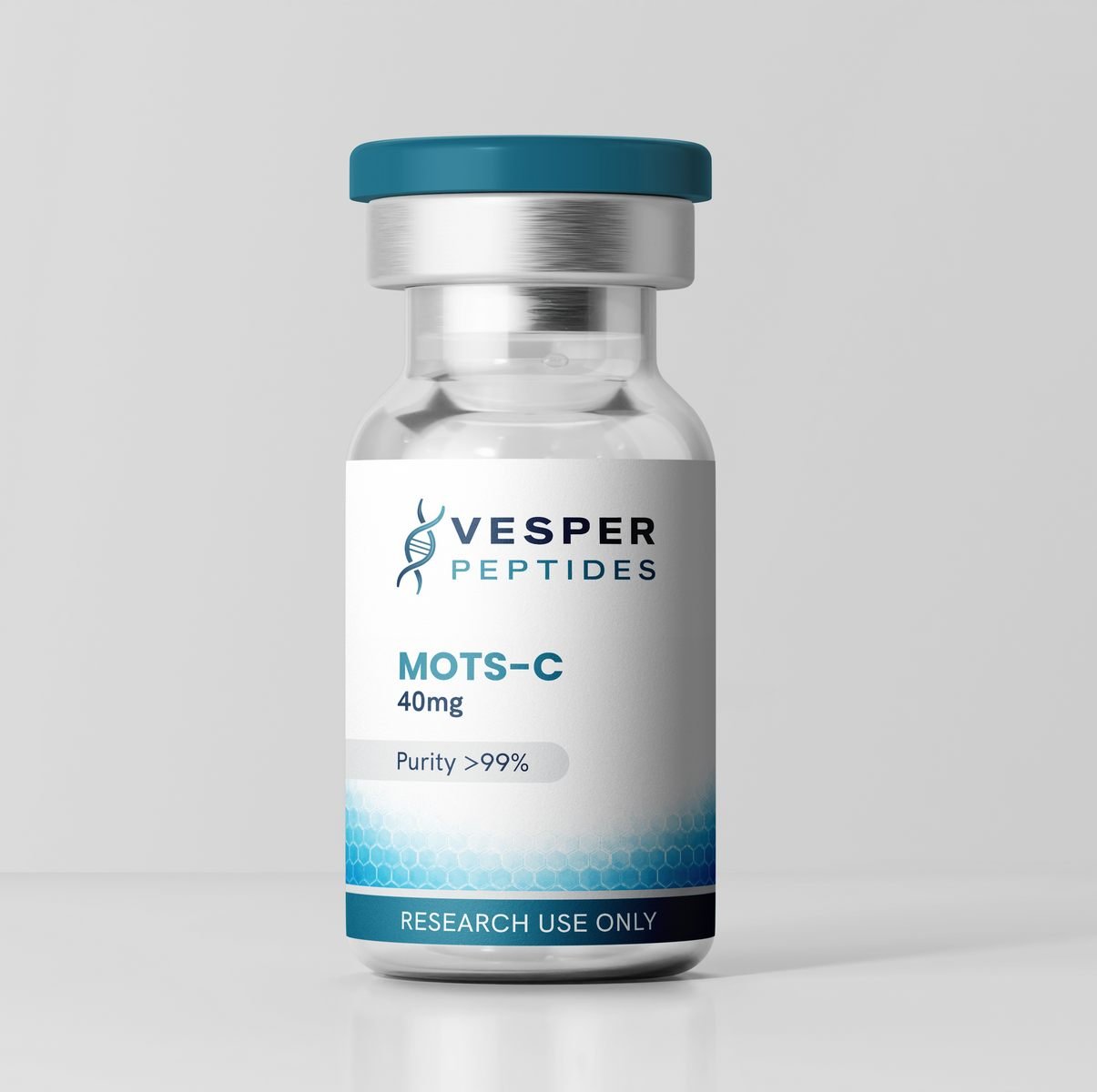
MOTS-C — Mitochondria-Derived Peptide Research Compound
MOTS-C (Mitochondrial Open Reading Frame of the 12S rRNA-c) is a 16-amino acid peptide encoded within the 12S ribosomal RNA (12S rRNA) region of the human mitochondrial genome — establishing it as a member of the growing family of mitochondria-derived peptides (MDPs). Unlike nuclear-encoded peptides, MOTS-C originates directly from the mitochondrial genome and functions as a retrograde signaling molecule — transmitting information from the mitochondria to the nucleus in response to metabolic stress and energy demands. Researchers in mitochondrial biology, exercise physiology, metabolic science, and aging research use this MOTS-C research peptide to study AMPK-mediated metabolic regulation, mitochondrial-nuclear crosstalk, skeletal muscle glucose handling, and longevity-associated metabolic adaptation. Furthermore, the 40mg vial format provides researchers with sufficient material for extended experimental programs and multi-arm study designs.
Mechanism of Action
MOTS-C exerts its metabolic effects primarily through AMPK activation in skeletal muscle and other metabolically active tissues. Upon cellular uptake, it translocates to the nucleus and activates AMPK — the master cellular energy sensor — through a mechanism that involves modulation of the folate cycle and one-carbon metabolism. Specifically, MOTS-C inhibits the folate cycle enzyme AICAR transformylase, leading to intracellular AICAR accumulation. This directly activates AMPK through AMP mimicry, triggering a broad downstream metabolic response.
As a result of AMPK activation, MOTS-C drives GLUT4 translocation to the plasma membrane, enhancing insulin-independent glucose uptake in skeletal muscle cells. Additionally, it promotes mitochondrial biogenesis through PGC-1α activation, increases fatty acid oxidation through ACC phosphorylation and CPT-1 disinhibition, and suppresses mTORC1-mediated anabolic signaling under conditions of energy stress. Consequently, the net metabolic effect closely parallels the cellular adaptations to aerobic exercise — making MOTS-C a highly relevant tool compound in exercise biology and metabolic adaptation research.
Furthermore, MOTS-C functions as a mitochondrial stress signal. When mitochondrial function declines — as occurs with aging, metabolic disease, or cellular stress — MOTS-C release increases, signaling the nucleus to activate compensatory metabolic programs. Therefore, researchers studying mitochondrial-nuclear communication and mitochondrial stress responses specifically use MOTS-C as a primary retrograde signaling tool compound.
MOTS-C in Aging and Longevity Research
MOTS-C occupies a unique position in aging biology research. Its circulating levels decline progressively with biological age in both rodent and primate models. Additionally, MOTS-C administration to aged mice has been shown to reverse age-associated declines in physical performance, insulin sensitivity, and skeletal muscle metabolic capacity in published preclinical studies. Consequently, it represents one of the most compelling mitochondria-derived peptide research compounds in current geroscience research.
Furthermore, MOTS-C’s role as a mitochondrial retrograde signal places it at the intersection of two of the most active research areas in aging biology — mitochondrial dysfunction and NAD+/AMPK pathway decline. Researchers studying these intersecting aging hallmarks therefore include MOTS-C in their experimental panels alongside compounds such as NAD+, SS-31, and AICAR to build a comprehensive picture of mitochondrial aging biology.
Key Research Applications
Researchers actively use MOTS-C across multiple metabolic, mitochondrial, and aging research domains. Specifically, it supports:
- AMPK activation research — Studies examining MOTS-C-driven AMPK phosphorylation kinetics, substrate phosphorylation profiles, and downstream metabolic responses in skeletal muscle, hepatocyte, and adipocyte cell systems.
- Skeletal muscle glucose metabolism — Investigation of MOTS-C-stimulated GLUT4 translocation, insulin-independent glucose uptake, and glycolytic flux in primary myotube and skeletal muscle cell line systems.
- Mitochondrial-nuclear retrograde signaling — Research examining how mitochondria-derived MOTS-C communicates metabolic status to the nucleus, modulates nuclear gene expression programs, and coordinates organelle-level metabolic adaptation.
- Exercise biology research — Studies using MOTS-C as a pharmacological exercise mimetic to model the molecular adaptations of aerobic exercise at the cellular level — particularly in skeletal muscle metabolic reprogramming studies.
- Aging and longevity biology — Preclinical aging models investigating MOTS-C decline kinetics, exogenous MOTS-C repletion effects on age-associated metabolic dysfunction, and its interactions with other longevity-associated pathways including NAD+ and sirtuin biology.
- Mitochondrial stress response research — Studies investigating MOTS-C as a mitochondrial stress signal — examining its release kinetics, nuclear translocation, and gene regulatory effects under conditions of mitochondrial dysfunction, oxidative stress, or metabolic overload.
Peptide Profile
| Parameter | Detail |
|---|---|
| Common Name | MOTS-C |
| Full Name | Mitochondrial Open Reading Frame of the 12S rRNA-c |
| Origin | Mitochondrial genome (12S rRNA region) |
| Peptide Class | Mitochondria-derived peptide (MDP) |
| Primary Target | AMPK (via folate cycle / AICAR accumulation) |
| Sequence Length | 16 amino acids |
| Molecular Weight | ~2,174 Da |
| Form | Lyophilized powder |
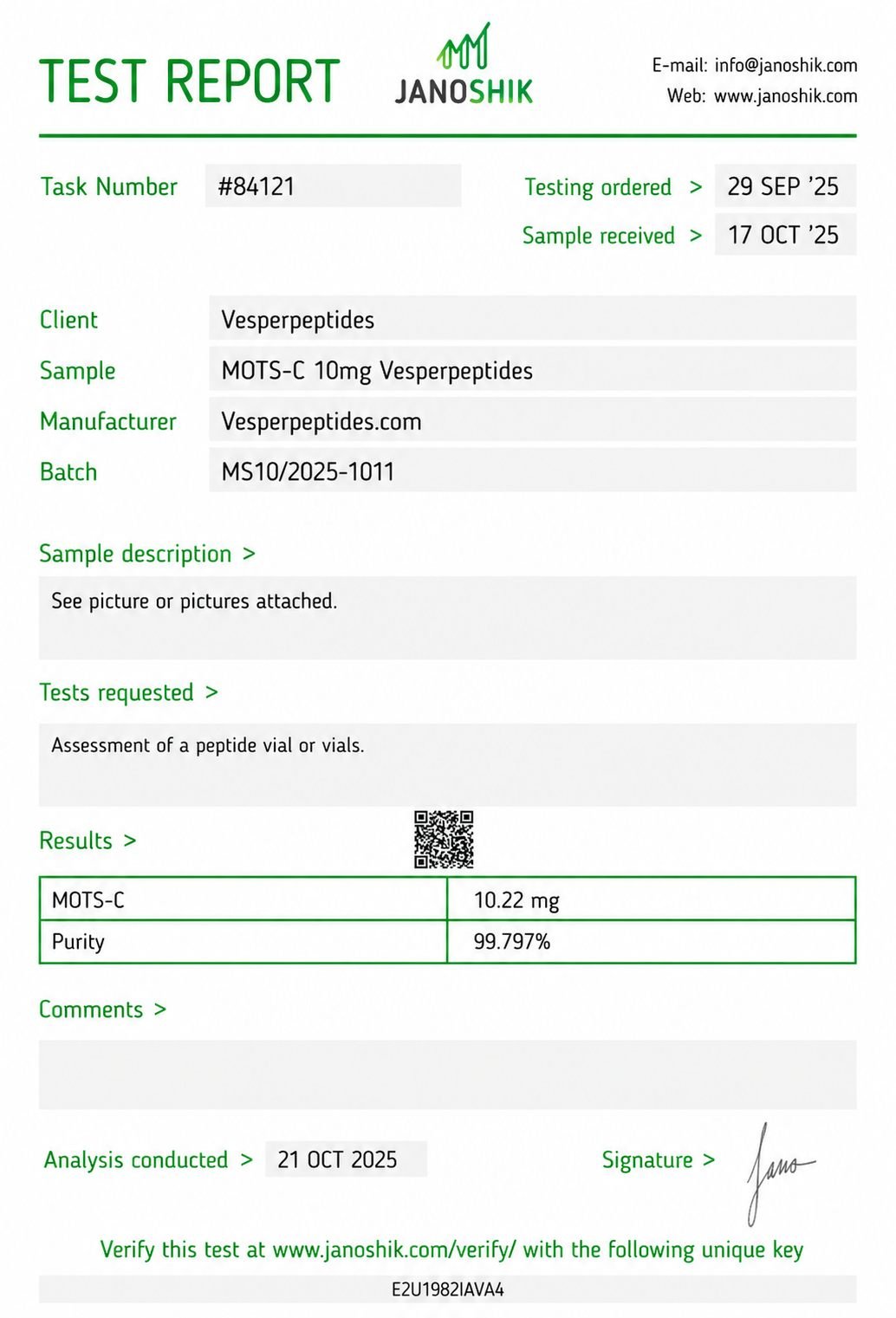
| Purity | ≥98% (HPLC verified) |
| Available Size | 10mg, 40mg |
| Storage | −20°C (lyophilized); 4°C (reconstituted) |
| Reconstitution | Sterile bacteriostatic water or PBS |
Reconstitution Guidelines
Reconstitute MOTS-C with sterile bacteriostatic water or phosphate-buffered saline. Add solvent slowly along the inner vial wall and gently swirl until fully dissolved. Do not shake or vortex. For a 40mg vial, researchers should determine the appropriate reconstitution volume based on their target working concentration and experimental protocol requirements. Furthermore, prepare single-use aliquots before storage at 4°C to minimize repeated freeze-thaw exposure across extended multi-session experimental programs.
Storage Conditions
Store lyophilized MOTS-C vials at −20°C, protected from direct light and moisture. Keep vials sealed until the point of reconstitution. Furthermore, once reconstituted, maintain at 4°C and use within 28–30 days. Avoid repeated freeze-thaw cycles to preserve AMPK-activating biological activity and peptide integrity throughout the study duration. The 40mg format provides researchers with ample material for extended multi-arm experimental programs without requiring frequent reordering.
For research use only. Not intended for human or veterinary administration. This product is not a drug, supplement, or food product.






Reviews
There are no reviews yet.