
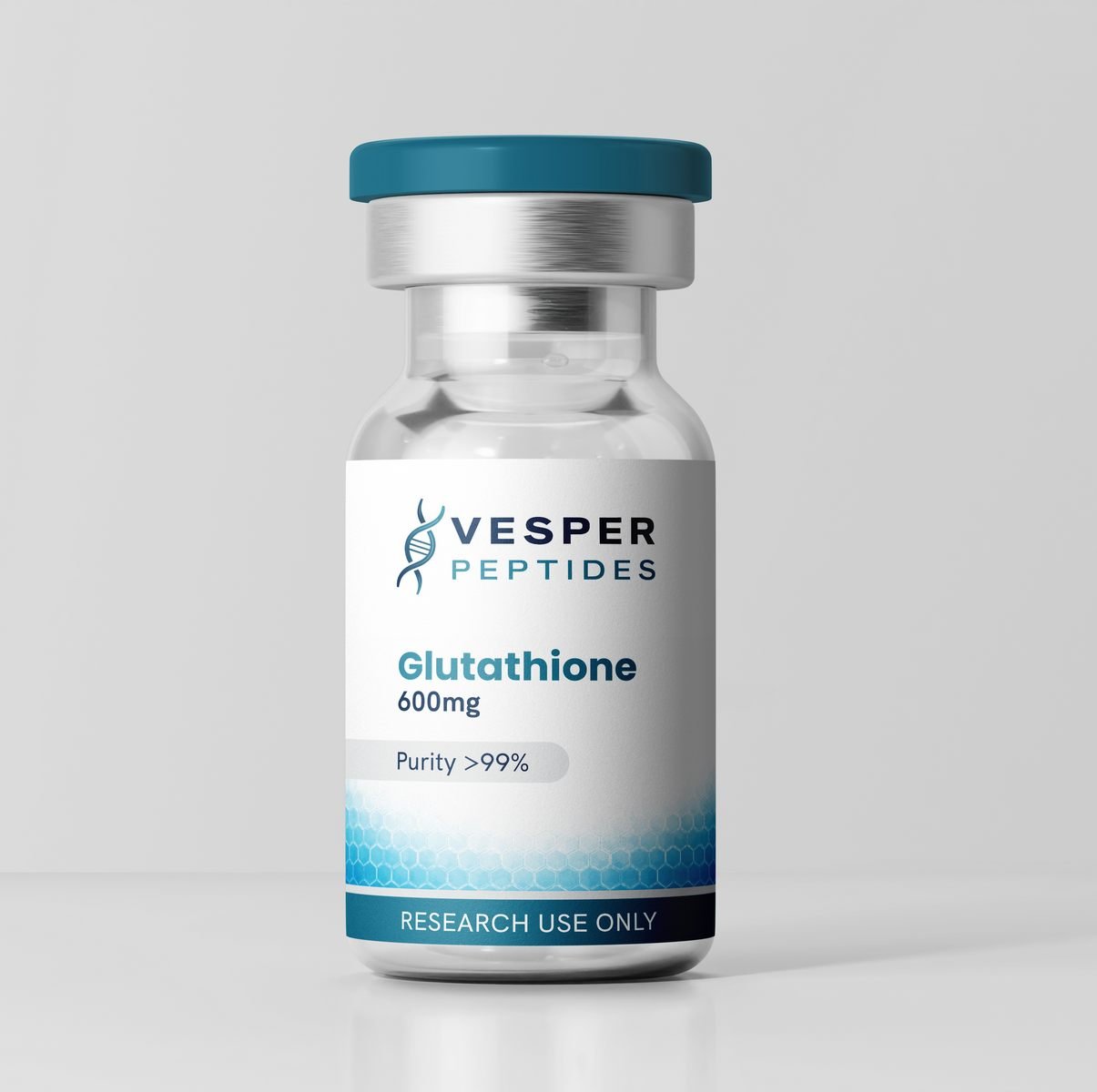
Glutathione — Antioxidant & Cellular Defense Research Compound
Glutathione is a naturally occurring tripeptide compound composed of glutamine, cysteine, and glycine that functions as one of the body’s primary intracellular antioxidants. Researchers in cellular biology, mitochondrial research, longevity science, and metabolic pharmacology use this Glutathione research compound to study oxidative stress regulation, redox signaling, detoxification pathways, and cellular defense mechanisms. Furthermore, its central role in maintaining intracellular redox balance makes it highly relevant in experimental models involving mitochondrial stress, cellular aging, inflammatory signaling, and metabolic dysfunction.
Unlike receptor-targeting peptide agonists, this antioxidant peptide primarily functions through direct biochemical interaction with reactive oxygen species (ROS), peroxide intermediates, and cellular detoxification systems. As a result, researchers frequently incorporate it into studies examining oxidative balance and intracellular protective responses under metabolic stress conditions.
Mechanism of Action
This cellular defense compound participates in multiple antioxidant and detoxification pathways throughout the intracellular environment. For example, researchers study how it neutralizes reactive oxygen species while simultaneously supporting glutathione peroxidase and glutathione reductase enzyme systems. Furthermore, scientists investigate its role in maintaining thiol-disulfide balance within proteins and cellular membranes.
Additionally, this redox-regulating peptide contributes to mitochondrial protection through oxidative stress modulation and free radical scavenging activity. Researchers also examine how intracellular glutathione availability influences inflammatory signaling cascades, cellular survival pathways, and detoxification capacity in hepatic and metabolic research models.
- Oxidative stress regulation and ROS neutralization
- Cellular detoxification and antioxidant defense pathways
- Mitochondrial protection and redox balance
- Hepatic metabolism and intracellular detoxification research
- Cellular aging and oxidative damage response studies
Consequently, this longevity-focused research compound remains highly relevant in advanced cellular biology and metabolic research protocols.
Key Research Applications
Oxidative Stress Research
Studies examining intracellular antioxidant capacity, ROS signaling modulation, and redox equilibrium maintenance in cellular systems.
Mitochondrial Function Research
Experimental models investigating mitochondrial defense mechanisms, oxidative phosphorylation stability, and metabolic stress adaptation.
Hepatic Metabolism Research
Research focused on detoxification pathways, glutathione conjugation systems, and intracellular metabolic clearance mechanisms.
Longevity & Cellular Aging Research
Studies analyzing oxidative damage accumulation, cellular defense signaling, and redox-related aging mechanisms.
Inflammatory Signaling Research
Experimental protocols examining oxidative stress-mediated inflammatory pathway activation and cellular response modulation.
Peptide Profile
| Parameter | Detail |
|---|---|
| Common Name | Glutathione |
| Compound Type | Antioxidant tripeptide |
| Primary Function | Redox regulation |
| Form | Lyophilized powder |
| Purity | ≥98% (HPLC verified) |
| Available Size | 600mg |
| Storage | −20°C (lyophilized) |
| Reconstitution | Sterile bacteriostatic water |
Reconstitution & Storage
Reconstitute with sterile bacteriostatic water. Add solvent slowly along the vial wall and swirl gently until fully dissolved. Store lyophilized vials at −20°C and protect from direct light exposure. Once reconstituted, maintain at 4°C and avoid repeated freeze-thaw cycles to preserve compound stability.
For research use only. Not intended for human or veterinary administration.
Reviews
There are no reviews yet.