
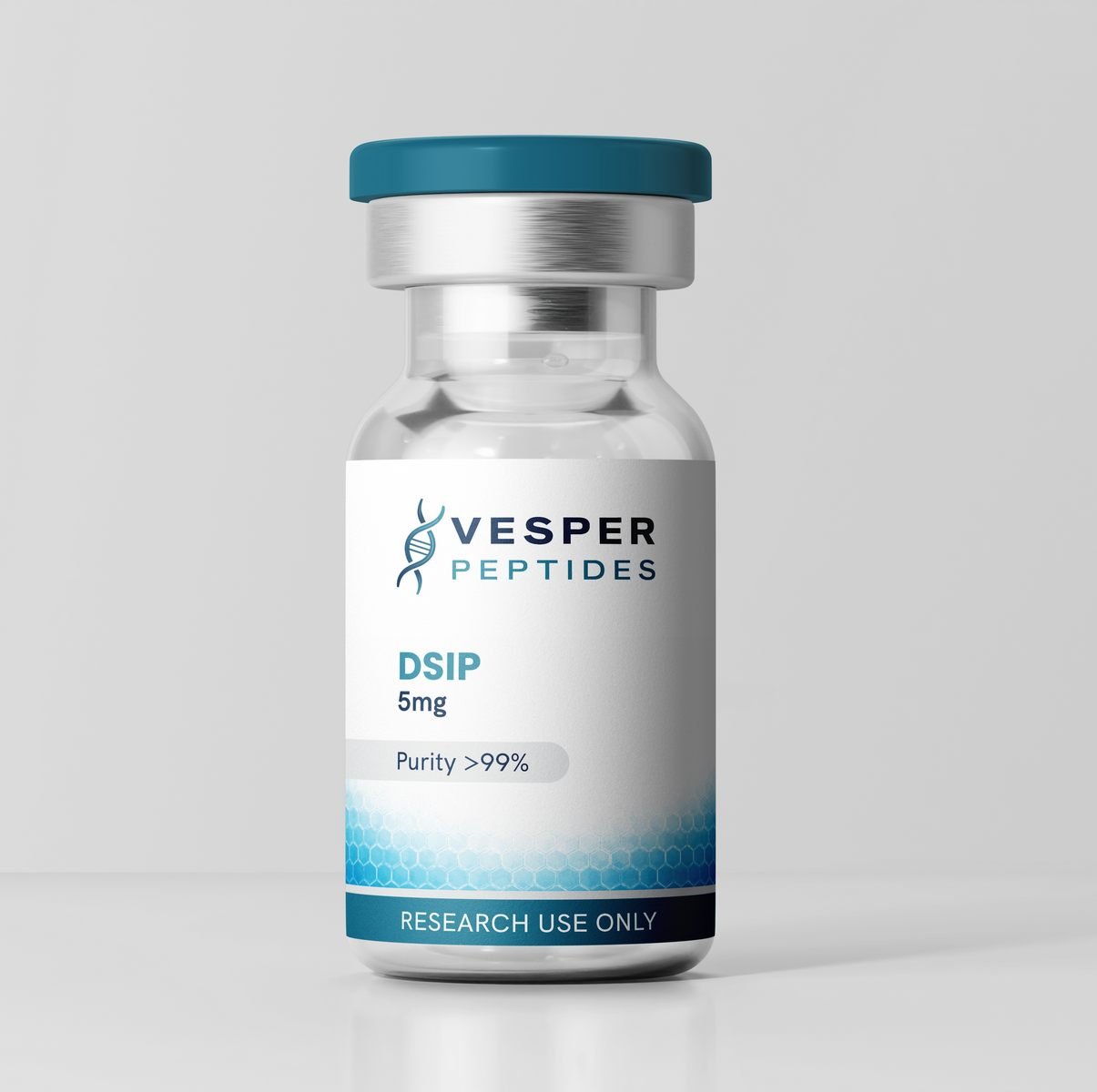
DSIP — Delta Sleep-Inducing Peptide Research Compound
DSIP (Trp-Ala-Gly-Gly-Asp-Ala-Ser-Gly-Glu) is a synthetic nonapeptide identical in sequence to the endogenous delta sleep-inducing peptide first isolated from the thalamic stimulation-induced cerebral venous blood of rabbits in 1977. Researchers in sleep biology, neuroendocrinology, and stress physiology use this DSIP research peptide to investigate sleep architecture regulation, HPA axis modulation, and pineal gland function. Furthermore, DSIP’s interactions with multiple neurochemical systems — including opioidergic, GABAergic, and melatonergic pathways — make it a broadly applicable tool in neurophysiology and cognitive neuroscience research.
Mechanism of Action
Sleep architecture modulation — DSIP promotes delta-wave (slow-wave) sleep induction through interactions with thalamic and cortical neuronal circuits. It modulates neuronal excitability and synchronization patterns associated with NREM sleep stages. Consequently, researchers use it as a tool to study the neurochemical basis of sleep stage transitions and slow-wave sleep induction mechanisms.
HPA axis regulation — DSIP modulates hypothalamic-pituitary-adrenal axis activity, particularly under stress conditions. It influences CRH release from the hypothalamus and downstream ACTH and cortisol secretion patterns. Therefore, researchers studying stress-related neuroendocrine dysregulation include DSIP in their experimental panels.
Pineal gland and melatonin research — DSIP influences melatonin synthesis and secretion through interactions with the hypothalamic-pineal axis. Additionally, it modulates circadian rhythm-associated gene expression in pineal cell research models.
Opioidergic interactions — DSIP interacts with mu and delta opioid receptors, contributing to its sleep-modulatory and stress-attenuating effects. Furthermore, it influences endogenous opioid peptide release patterns in stress response models.
Key Research Applications
- Sleep architecture research — Studies examining DSIP-driven delta-wave induction, NREM sleep stage modulation, and sleep-wake cycle regulation in neuronal and preclinical model systems.
- HPA axis research — Investigation of DSIP effects on CRH, ACTH, and cortisol secretion dynamics under basal and stress-activated conditions.
- Pineal and melatonin research — Studies examining DSIP modulation of pineal melatonin synthesis, circadian rhythm regulation, and light-dark cycle responsiveness.
- Stress response research — Preclinical models examining DSIP attenuation of stress-induced HPA axis hyperactivation and associated neurochemical changes.
- Opioidergic pathway research — Investigation of DSIP interactions with opioid receptor subtypes and endogenous opioid peptide systems.
Peptide Profile
| Parameter | Detail |
|---|---|
| Common Name | DSIP |
| Full Name | Delta Sleep-Inducing Peptide |
| Sequence | Trp-Ala-Gly-Gly-Asp-Ala-Ser-Gly-Glu |
| Sequence Length | 9 amino acids (nonapeptide) |
| Key Systems | Thalamic sleep circuits, HPA axis, pineal gland, opioidergic |
| Molecular Weight | ~849 Da |
| Form | Lyophilized powder |
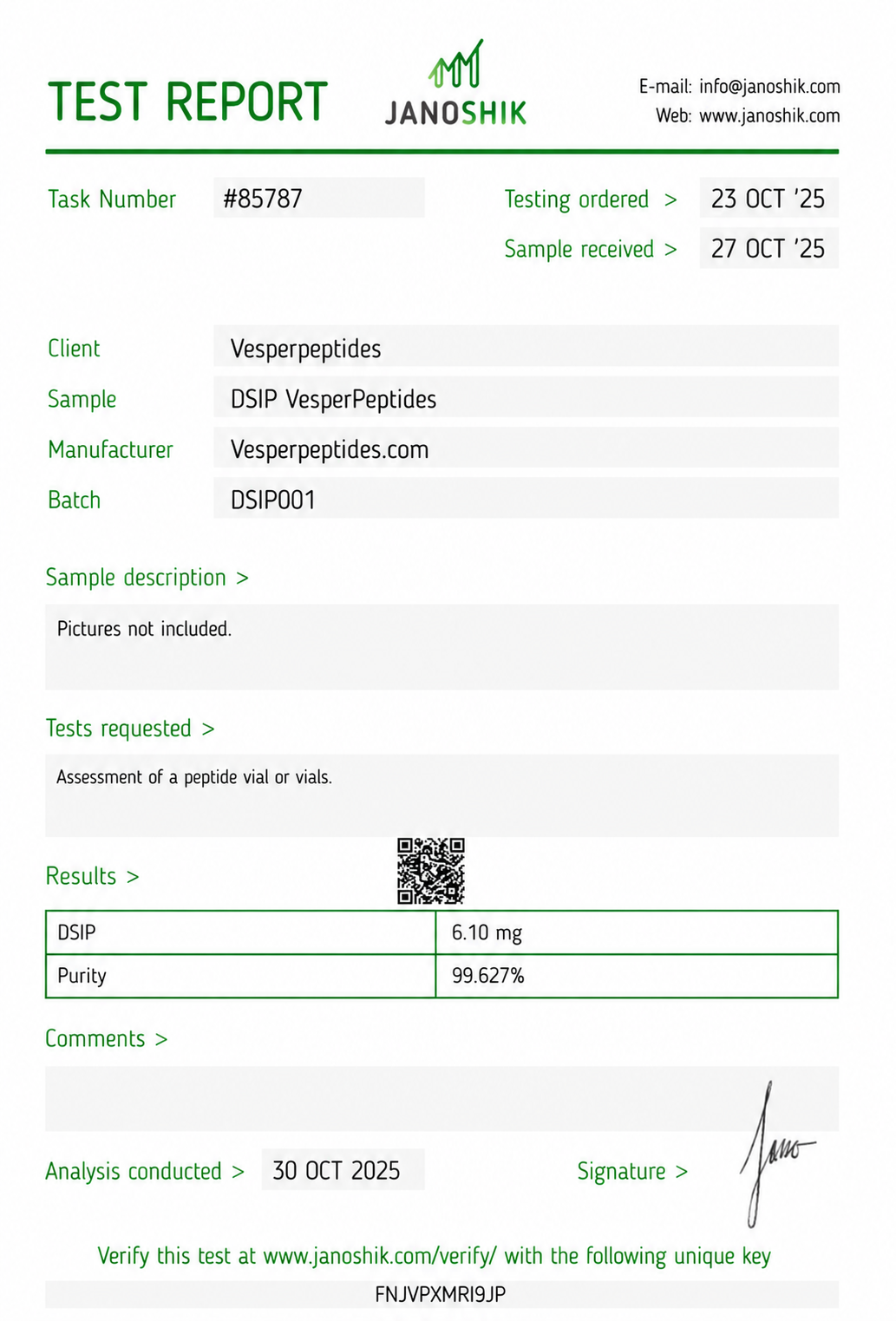
| Purity | ≥98% (HPLC verified) |
| Available Size | 5mg |
| Storage | −20°C (lyophilized); 4°C (reconstituted) |
| Reconstitution | Sterile bacteriostatic water |
Reconstitution & Storage
Reconstitute with sterile bacteriostatic water. Add solvent slowly along the vial wall and swirl gently. Store lyophilized vials at −20°C. Once reconstituted, maintain at 4°C and use within 28 days. Avoid repeated freeze-thaw cycles.
For research use only. Not intended for human or veterinary administration.
Reviews
There are no reviews yet.