
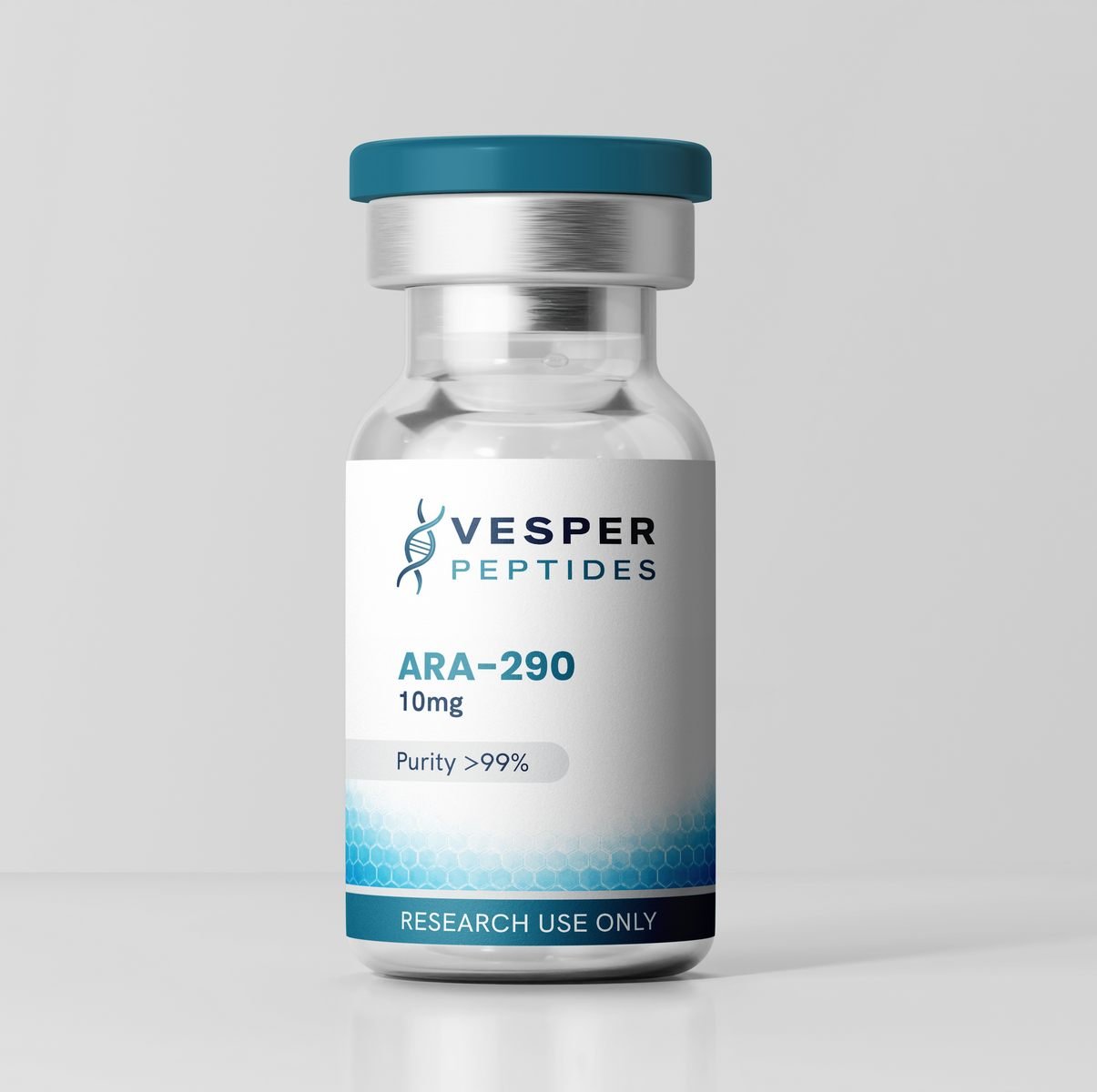
ARA-290 — Non-Erythropoietic Innate Repair Receptor Research Peptide
ARA-290 is a synthetic 11-amino acid peptide corresponding to the helix B surface region of erythropoietin (EPO). It selectively activates the innate repair receptor (IRR) — the heterodimeric complex of the EPO receptor (EPOR) and the common beta chain receptor (βcR) — without engaging the classical homodimeric EPO receptor (EPOR/EPOR) responsible for erythropoietic and thromboembolic effects. Researchers in neuroprotection biology, pain research, and anti-inflammatory pharmacology use this ARA-290 research peptide to study tissue-protective EPO signaling, IRR-mediated neuroprotection, and anti-inflammatory mechanisms independently of hematopoietic confounders. Furthermore, this receptor selectivity profile enables researchers to dissect the tissue-repair and neuroprotective arms of EPO biology from its erythropoietic functions.
Mechanism of Action
ARA-290 binds the EPOR/βcR heterodimer (IRR) with selectivity over the classical EPOR homodimer. IRR activation triggers downstream signaling through JAK2/STAT5, PI3K/AKT, and MAPK/ERK pathways in tissue-protective and anti-inflammatory cells. As a result, it promotes neuronal survival, reduces apoptosis in injured neural tissue, and suppresses pro-inflammatory cytokine production without stimulating red blood cell production or platelet aggregation.
Furthermore, IRR activation in peripheral sensory neurons modulates nociceptive signaling, providing mechanistic basis for pain research applications. Additionally, ARA-290 drives macrophage polarization toward anti-inflammatory M2 phenotypes through IRR-mediated signal transduction. Consequently, researchers use it across neuropathic pain, ischemic injury, autoimmune disease, and metabolic inflammation research models.
Key Research Applications
- IRR signaling research — Characterization of EPOR/βcR heterodimer activation, JAK2/STAT5 signaling, and downstream tissue-protective gene expression using ARA-290 as a selective IRR agonist.
- Neuroprotection research — Studies examining ARA-290-driven neuronal survival, axonal protection, and neuropathic pain attenuation in peripheral and central nervous system injury models.
- Anti-inflammatory research — Investigation of ARA-290 effects on macrophage polarization, pro-inflammatory cytokine suppression, and resolution of inflammation in immune cell systems.
- Non-erythropoietic EPO biology — Studies specifically designed to dissect tissue-protective EPO signaling from erythropoietic effects, using ARA-290 as a non-hematopoietic IRR-selective research tool.
- Metabolic inflammation research — Investigation of IRR-mediated anti-inflammatory signaling in metabolic disease contexts including diabetic neuropathy and obesity-associated inflammation models.
Peptide Profile
| Parameter | Detail |
|---|---|
| Common Name | ARA-290 |
| Also Known As | Helix B Surface Peptide (HBSP) |
| Receptor Target | IRR (EPOR/βcR heterodimer) |
| Selectivity | Non-erythropoietic (no EPOR homodimer activation) |
| Molecular Weight | ~1,277 Da |
| Form | Lyophilized powder |
| Purity | ≥98% (HPLC verified) |
| Available Size | 10mg |
| Storage | −20°C (lyophilized); 4°C (reconstituted) |
| Reconstitution | Sterile bacteriostatic water |
Reconstitution & Storage
Reconstitute with sterile bacteriostatic water. Add solvent slowly along the vial wall and swirl gently. Store lyophilized vials at −20°C. Once reconstituted, maintain at 4°C and use within 28 days. Avoid repeated freeze-thaw cycles.
For research use only. Not intended for human or veterinary administration.
Reviews
There are no reviews yet.