
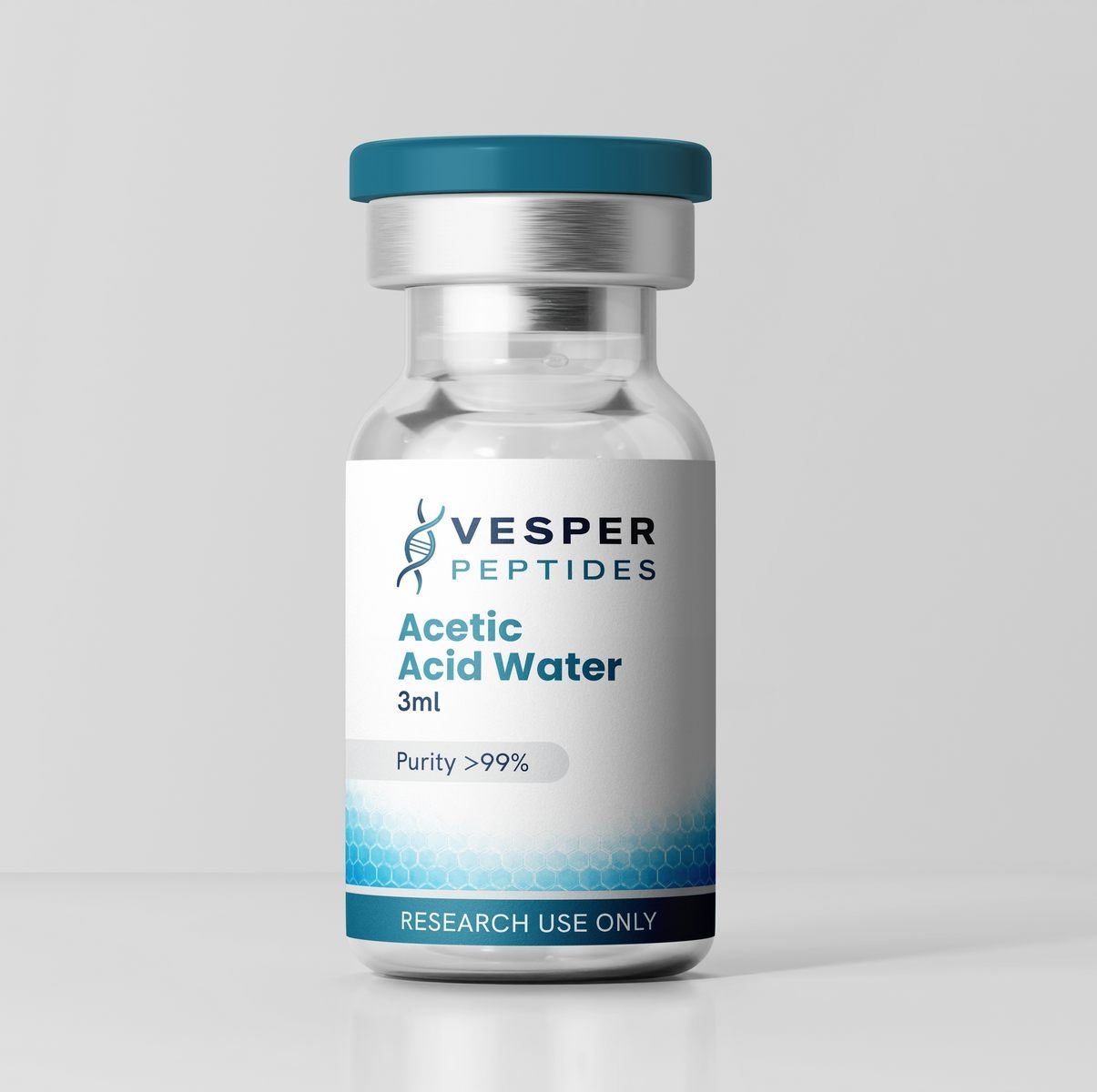
Acetic Acid Water — Specialized Peptide Reconstitution Solvent
Acetic Acid Water is a sterile, research-grade dilute acetic acid solution (approximately 0.1–1% v/v glacial acetic acid in sterile water) specifically formulated as a reconstitution solvent for research peptides requiring acidic conditions for initial solubilization. Researchers use acetic acid water for peptide reconstitution when working with compounds that contain hydrophobic or aggregation-prone residues that limit their solubility at neutral pH. Furthermore, selecting the correct reconstitution solvent is one of the most important practical considerations in peptide research — using an incompatible solvent can cause aggregation, incomplete dissolution, reduced biological activity, and inaccurate concentration determinations.
When to Use Acetic Acid Water vs. Bacteriostatic Water
Most research peptides reconstitute cleanly in bacteriostatic water at neutral pH. However, certain peptides — particularly those with specific hydrophobic residue profiles or disulfide-bridged cyclic structures — require an initial acidic solubilization step before dilution to working concentration in aqueous buffers.
Use acetic acid water for — IGF-1 LR3 (requires initial acidic solubilization before PBS dilution), Melanotan I (afamelanotide), Melanotan II, and other peptides specified in their individual reconstitution guidelines as requiring acidic initial solubilization conditions.
Use bacteriostatic water for — The majority of peptides in this catalog including all GLP-1 compounds, GHRH analogues, GHRPs, BPC-157, TB-500, Semax, Selank, and others — as specified in their individual product reconstitution guidelines.
Additionally, for peptides requiring acetic acid solubilization, the standard protocol involves adding a small volume of acetic acid water (e.g., 100µl) to achieve initial dissolution, followed by dilution to the target working concentration with sterile PBS or bacteriostatic water. This two-step approach ensures complete peptide solubilization while achieving the desired final pH and concentration for experimental use.
Why Correct Reconstitution Solvent Selection Matters
Using an incompatible reconstitution solvent — such as neutral pH bacteriostatic water for a peptide requiring acidic initial solubilization — can lead to several research-compromising outcomes. Incomplete peptide dissolution reduces effective concentration and produces inaccurate dose-response data. Peptide aggregation can block pipette tips, clog filters, and introduce particulate matter into assay systems. Furthermore, aggregated peptides may retain reduced receptor binding affinity compared to correctly solubilized monomeric peptide solutions. Consequently, using the appropriate reconstitution solvent from the initial preparation step is essential for producing reliable and reproducible research data.
Product Profile
| Parameter | Detail |
|---|---|
| Product Name | Acetic Acid Water |
| Composition | Dilute acetic acid (~0.1–1% v/v) in sterile water |
| Primary Use | Initial solubilization of hydrophobic/aggregation-prone peptides |
| Compatible Peptides | IGF-1 LR3, Melanotan I, Melanotan II, and others as specified |
| Available Sizes | 3ml, 10ml |
| Storage | Room temperature; protect from freezing and direct light |
| pH | Acidic (~3.0–4.0) |
Storage Conditions
Store acetic acid water vials at room temperature, protected from freezing and direct sunlight. Furthermore, keep vials sealed until the point of use to maintain sterility. Discard any vials showing visible particulates or discoloration before use. The 10ml format provides sufficient volume for multiple peptide reconstitution sessions without requiring frequent reordering.
For research use only. Not intended for human or veterinary administration.
Reviews
There are no reviews yet.