
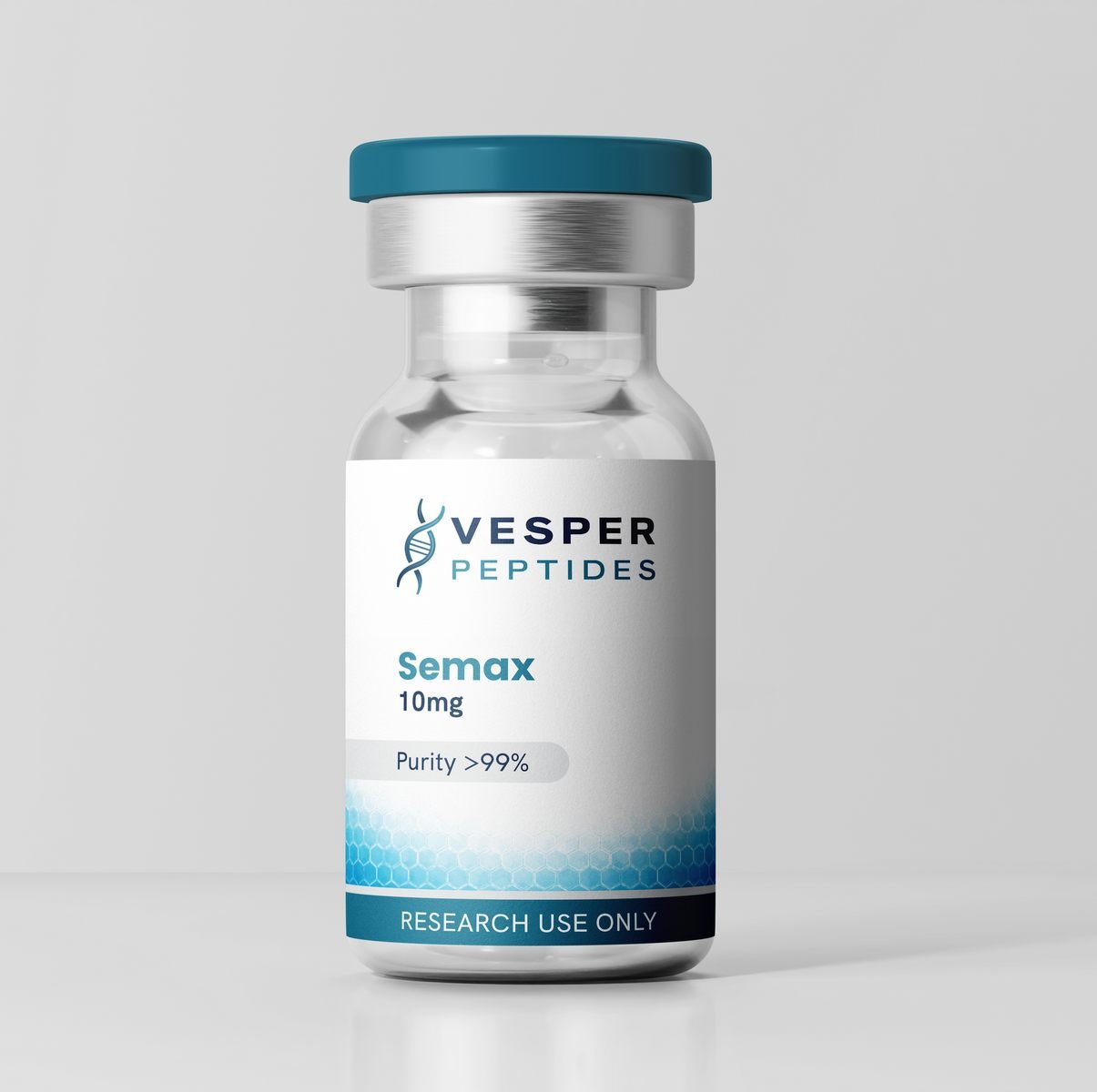
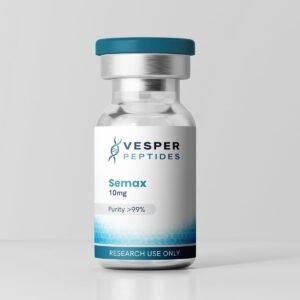
Semax — Neuroprotective ACTH 4-7 Analogue Research Peptide
Semax (Met-Glu-His-Phe-Pro-Gly-Pro) is a synthetic heptapeptide derived from the ACTH(4–7) sequence with a C-terminal Pro-Gly-Pro extension that confers metabolic stability against peptidase degradation. Researchers in neuroscience, neuroprotection biology, and cognitive research use this Semax research peptide to study neurotrophic factor regulation, neurotransmitter system modulation, and ischemic neuroprotection in CNS experimental models. Furthermore, its broad neurochemical activity profile — spanning BDNF upregulation, dopaminergic, serotonergic, and histaminergic system modulation — makes it a uniquely versatile tool compound for researchers studying multiple aspects of CNS biology simultaneously.
Mechanism of Action
Semax activates multiple neurochemical pathways that collectively support neuroprotection and cognitive function research.
BDNF and NGF upregulation — Semax actively increases BDNF and NGF expression in cortical and hippocampal neurons. As a result, it promotes neuronal survival, synaptic plasticity, and axonal growth in neurotrophic factor research models. Furthermore, BDNF upregulation by Semax activates TrkB receptor signaling, providing a downstream tool for studying neurotrophic signaling cascades.
Neurotransmitter system modulation — Semax modulates serotonergic, dopaminergic, and histaminergic neurotransmission through receptor-level interactions. Consequently, researchers use it in studies examining monoamine system regulation and its relationship to cognitive function, mood, and attention-related neural circuit activity.
Neuroprotection in ischemia models — Semax demonstrates neuroprotective effects in rodent focal cerebral ischemia models. It reduces infarct volume, preserves neuronal viability in the ischemic penumbra, and attenuates neuroinflammatory responses. Therefore, researchers studying ischemic neuroprotection specifically include Semax in their compound panels.
Key Research Applications
- BDNF/NGF pathway research — Studies examining Semax-driven neurotrophic factor upregulation, TrkB/TrkA receptor activation, and downstream MAPK and PI3K/AKT signaling in neuronal cell models.
- Cognitive modulation research — Investigation of Semax effects on memory consolidation, attention, and learning-related neural circuit activity in preclinical behavioral and cellular models.
- Ischemic neuroprotection research — Preclinical studies examining Semax-mediated neuroprotection in focal and global cerebral ischemia models.
- Neurotransmitter system research — Studies investigating Semax modulation of dopaminergic, serotonergic, and histaminergic pathways in CNS cell systems.
- Neuroplasticity research — Investigation of Semax-driven synaptic plasticity, dendritic spine dynamics, and long-term potentiation in hippocampal and cortical models.
Peptide Profile
| Parameter | Detail |
|---|---|
| Common Name | Semax |
| Sequence | Met-Glu-His-Phe-Pro-Gly-Pro |
| Based On | ACTH(4–7) + Pro-Gly-Pro extension |
| Key Targets | BDNF, NGF, serotonergic, dopaminergic, histaminergic systems |
| Molecular Weight | ~887 Da |
| Form | Lyophilized powder |
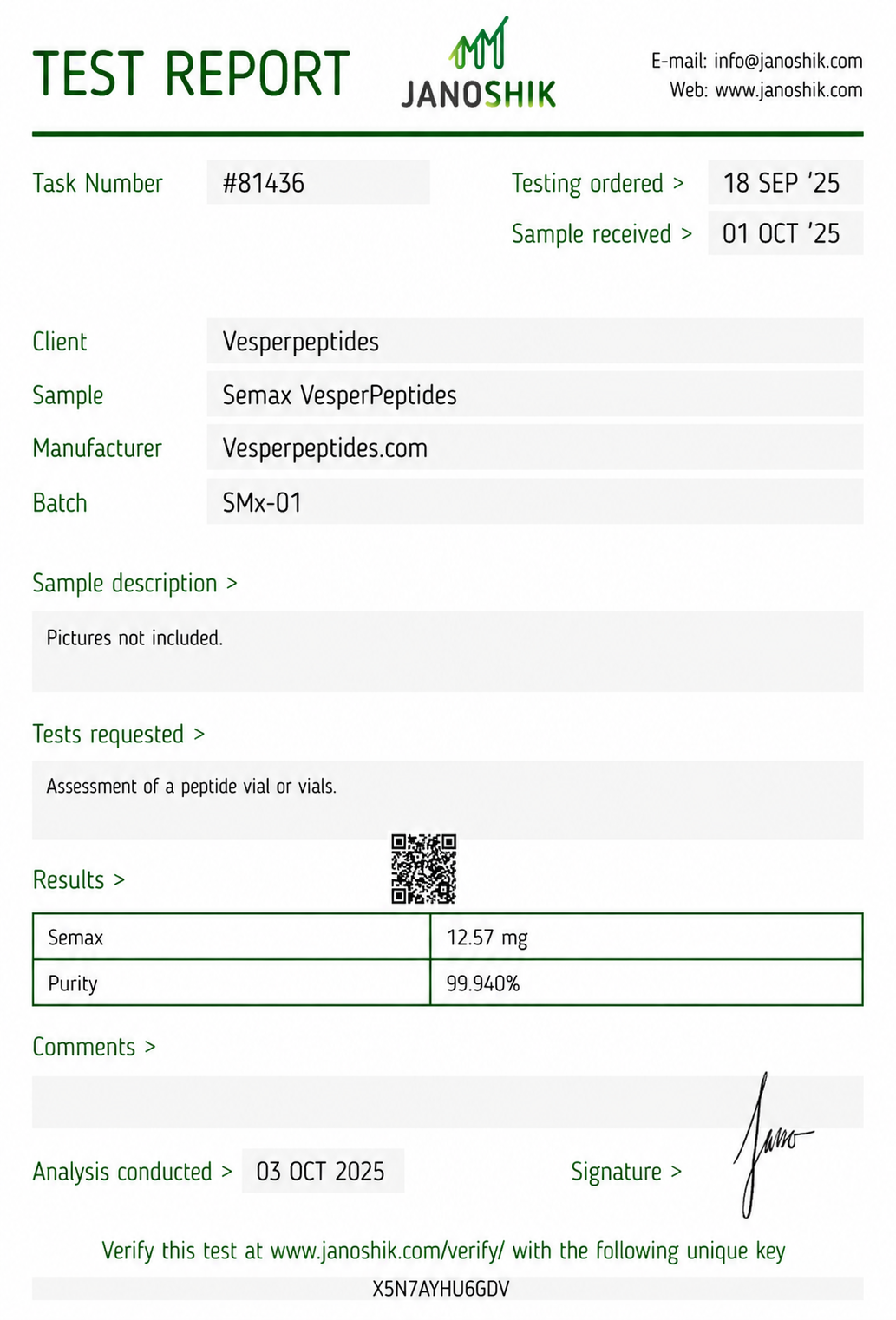
| Purity | ≥98% (HPLC verified) |
| Available Size | 10mg |
| Storage | −20°C (lyophilized); 4°C (reconstituted) |
| Reconstitution | Sterile bacteriostatic water |
Reconstitution & Storage
Reconstitute with sterile bacteriostatic water. Add solvent slowly along the vial wall and swirl gently. Store lyophilized vials at −20°C. Once reconstituted, maintain at 4°C and use within 28 days. Avoid repeated freeze-thaw cycles.
For research use only. Not intended for human or veterinary administration.
Reviews
There are no reviews yet.