
GHK-Cu — Research-Grade Copper Tripeptide for Wound Healing & Tissue Repair Research
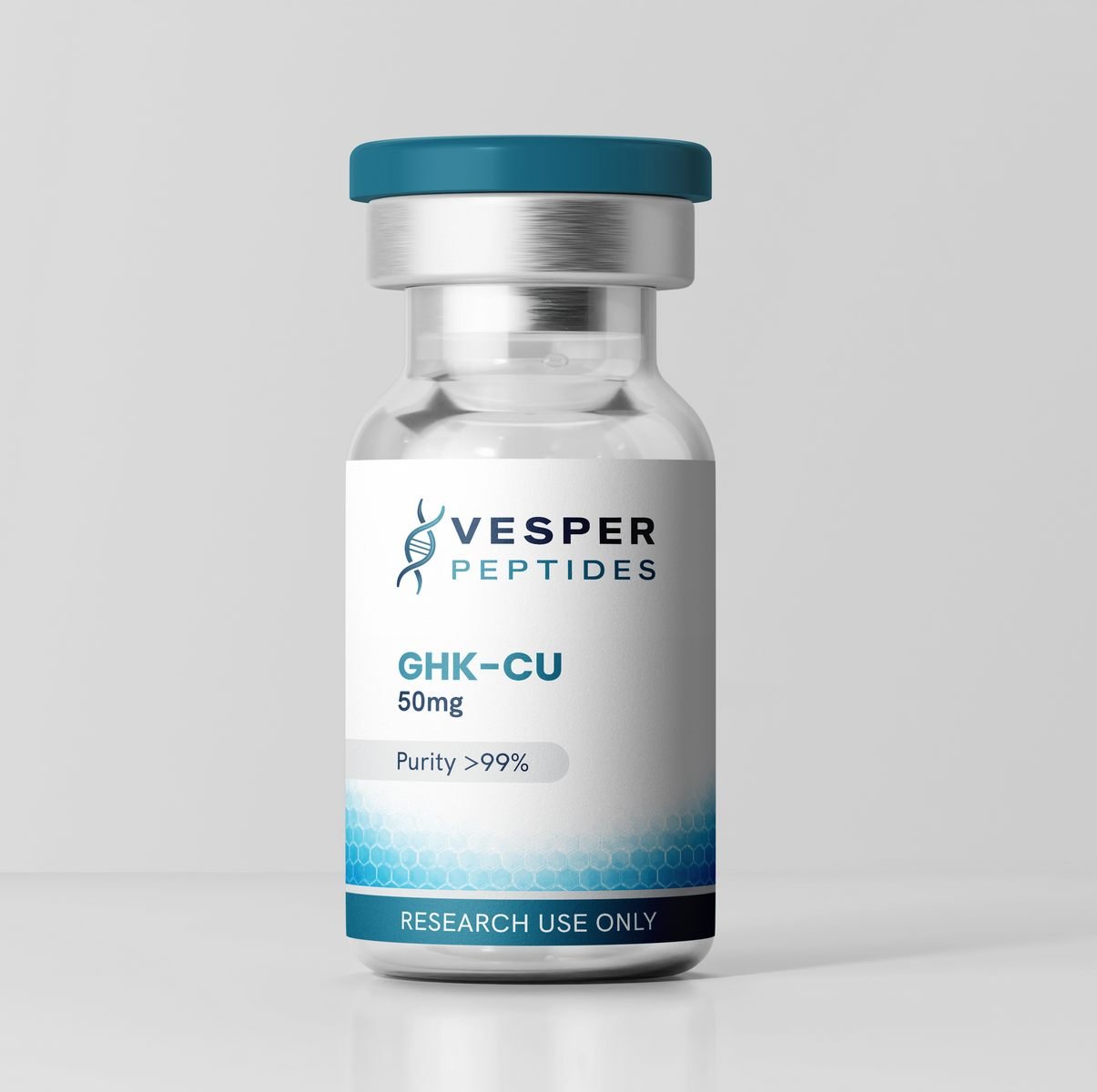
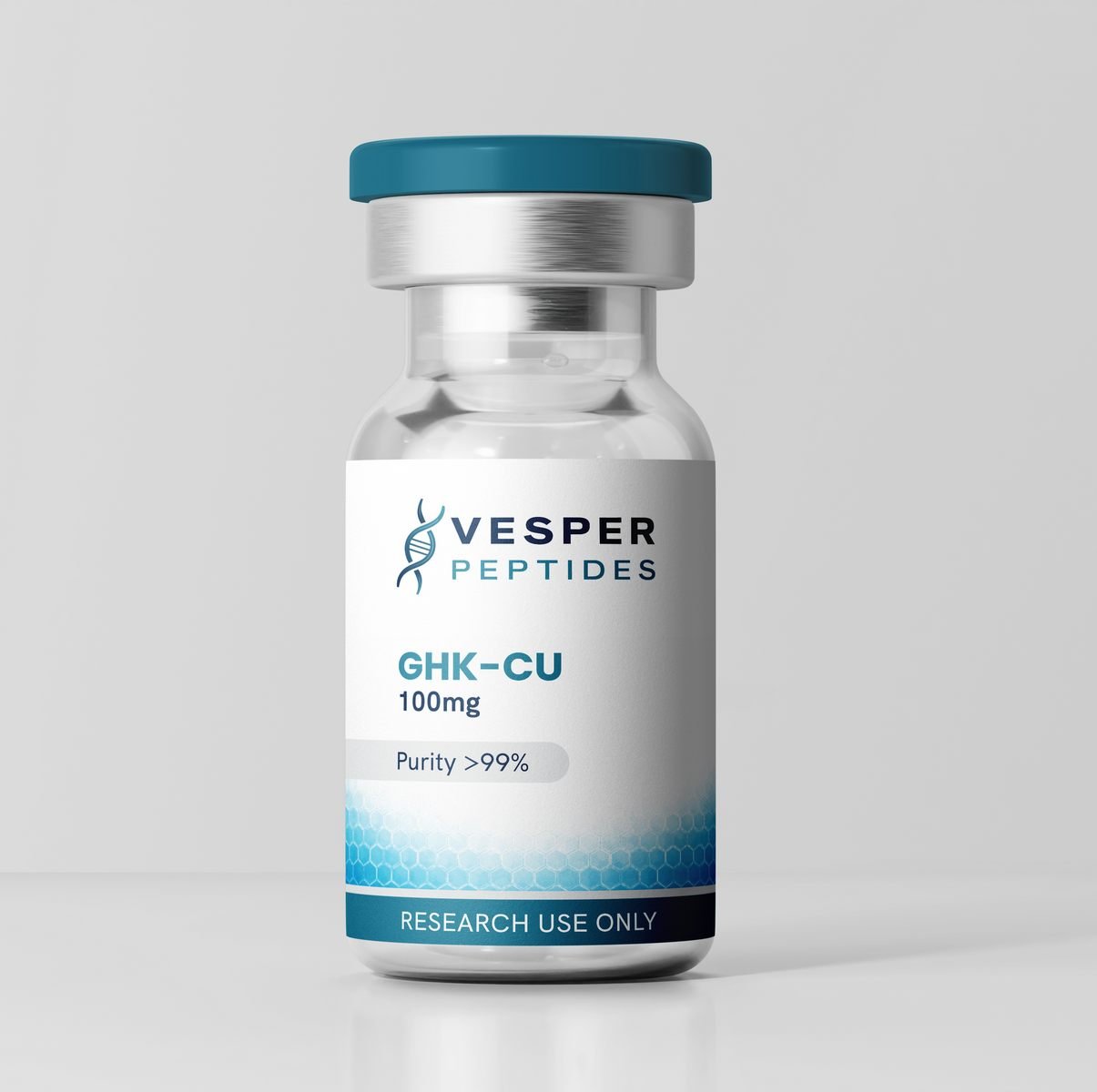
GHK-Cu (Glycyl-L-histidyl-L-lysine copper(II) complex) is a naturally occurring tripeptide-copper chelate found in human plasma, saliva, and urine. It binds copper(II) ions with high affinity through coordination with the histidine imidazole nitrogen and lysine amine groups. Researchers in wound healing biology, skin science, and regenerative medicine use this GHK-Cu research peptide as a broadly active tool compound for studying extracellular matrix remodeling, antioxidant defense, and gene expression regulation in tissue repair models. Furthermore, its large-format 50mg and 100mg vial options make it well-suited for extended experimental programs requiring consistent compound availability across multiple study arms.
Mechanism of Action
GHK-Cu exerts its biological effects through several interconnected mechanisms that collectively promote tissue repair, extracellular matrix remodeling, and antioxidant defense.
Collagen and elastin synthesis — GHK-Cu actively stimulates collagen I, collagen III, and elastin synthesis in fibroblasts and dermal cells. Additionally, it promotes glycosaminoglycan production and decorin expression, supporting extracellular matrix structural integrity in wound healing models.
MMP regulation — GHK-Cu modulates matrix metalloproteinase (MMP) activity in a context-dependent manner — stimulating MMP-2 and MMP-9 activity during active remodeling phases while promoting TIMP expression to regulate excessive matrix degradation. Consequently, it supports balanced extracellular matrix turnover rather than simply driving matrix synthesis or degradation in isolation.
Antioxidant defense — GHK-Cu activates superoxide dismutase (SOD) and catalase expression, enhancing cellular antioxidant capacity. Furthermore, it modulates the Nrf2/ARE pathway, upregulating a broad panel of antioxidant and cytoprotective genes in oxidatively stressed cells.
Gene expression regulation — Microarray studies have identified GHK-Cu as capable of modulating the expression of over 30 genes associated with tissue remodeling, inflammation resolution, and anti-aging responses. As a result, it represents a multifunctional gene expression tool in skin biology and tissue repair research.
Key Research Applications
- Wound healing research — Studies examining GHK-Cu-driven fibroblast proliferation, migration, collagen contraction, and re-epithelialization in wound closure models.
- Collagen synthesis research — Investigation of GHK-Cu effects on procollagen gene expression, collagen fibril assembly, and extracellular matrix structural organization in dermal fibroblast systems.
- MMP regulation research — Studies examining context-dependent MMP activation and TIMP regulation by GHK-Cu in ECM remodeling models.
- Antioxidant and Nrf2 research — Investigation of GHK-Cu-driven SOD and catalase upregulation, Nrf2/ARE pathway activation, and cellular oxidative stress protection.
- Skin biology research — Studies examining GHK-Cu effects on keratinocyte and fibroblast biology, dermal matrix regeneration, and epidermal barrier repair.
- Gene expression modulation research — Transcriptomic studies examining the broad gene regulatory effects of GHK-Cu on tissue remodeling, inflammation, and anti-aging gene networks.
Peptide Profile
| Parameter | Detail |
|---|---|
| Common Name | GHK-Cu |
| Full Name | Glycyl-L-histidyl-L-lysine copper(II) complex |
| Metal Ion | Copper(II) |
| Key Pathways | Collagen/elastin synthesis, MMP regulation, SOD/catalase, Nrf2/ARE |
| Molecular Weight | ~340 Da (free tripeptide) |
| Form | Lyophilized powder |
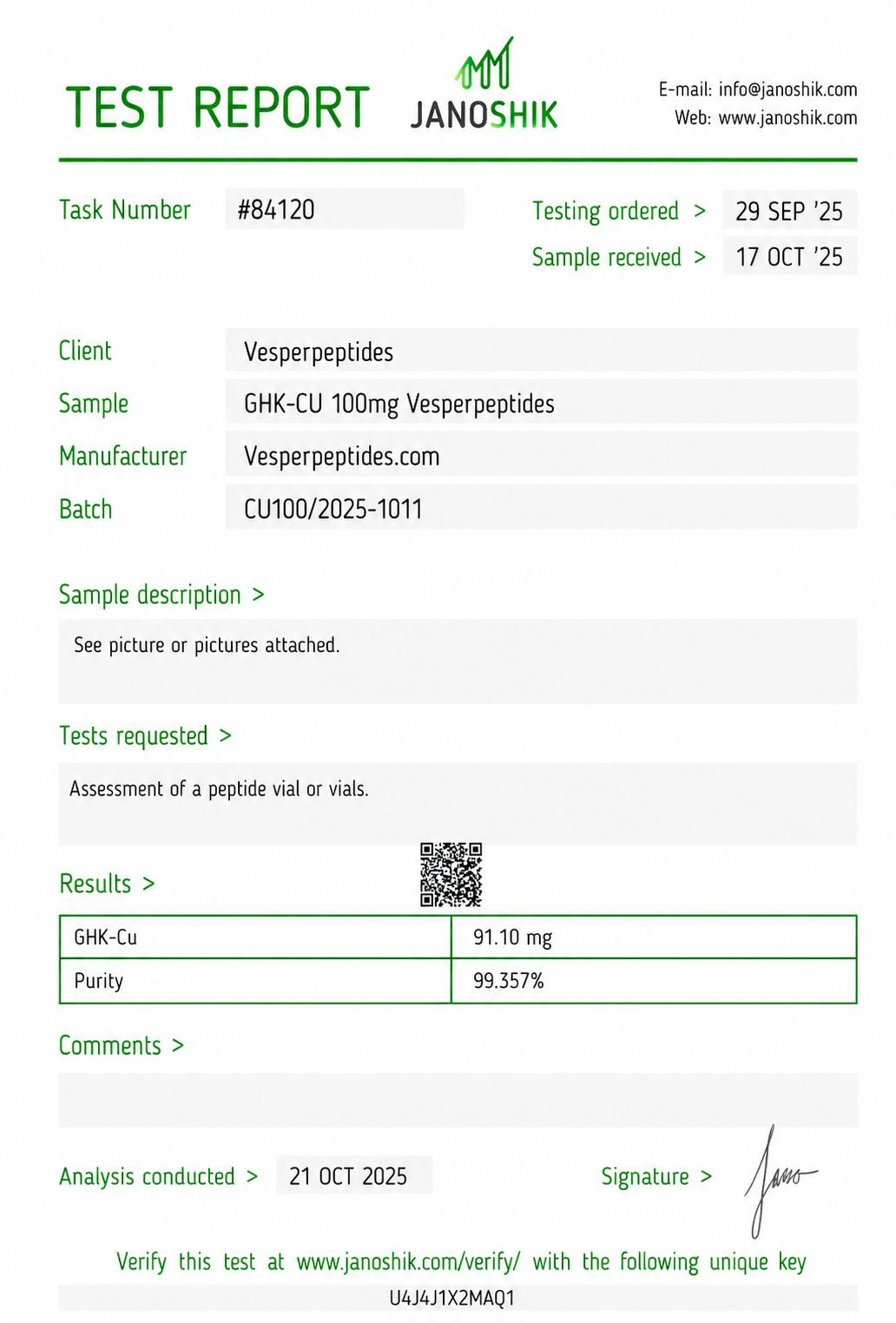
| Purity | ≥98% (HPLC verified) |
| Available Sizes | 50mg, 100mg |
| Storage | −20°C (lyophilized); 4°C (reconstituted) |
| Reconstitution | Sterile water or PBS |
| Solubility | Freely water-soluble |
Reconstitution & Storage
Reconstitute GHK-Cu with sterile water or PBS. It dissolves readily in aqueous solution. Add solvent slowly along the vial wall and swirl gently. Store lyophilized vials at −20°C, protected from light. Once reconstituted, maintain at 4°C and use within 28–30 days. Avoid repeated freeze-thaw cycles.
For research use only. Not intended for human or veterinary administration.
Reviews
There are no reviews yet.