
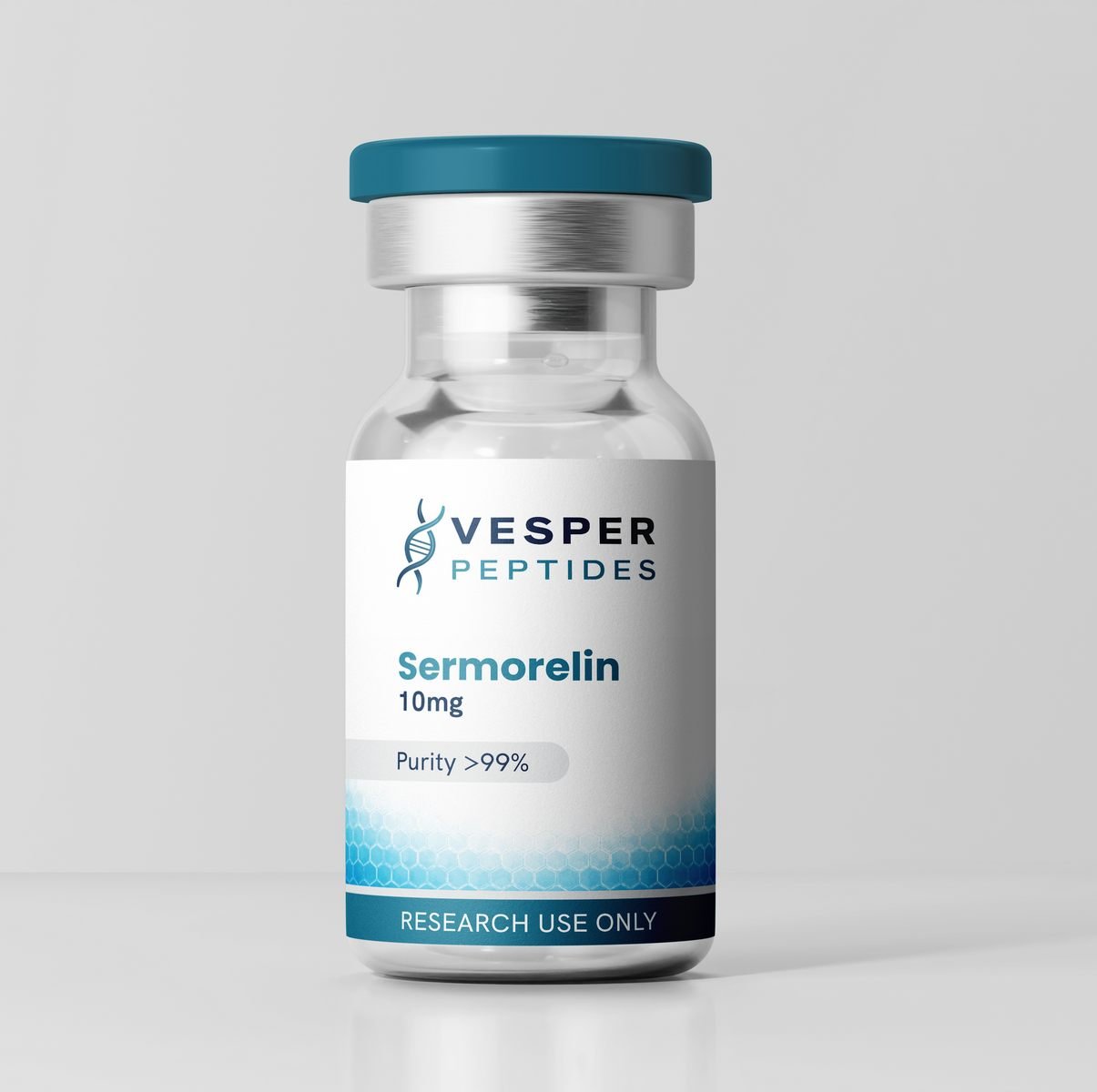
Sermorelin — GRF 1-29 GHRH Fragment Research Peptide
Sermorelin (GRF 1–29 NH₂) is a synthetic 29-amino acid peptide corresponding to the shortest fully bioactive N-terminal fragment of endogenous growth hormone-releasing hormone (GHRH). It retains the complete receptor-binding domain of native GHRH while omitting the C-terminal residues that contribute to extended stability but not to GHRHR activation. Researchers in pituitary biology, neuroendocrinology, and growth hormone axis research use this sermorelin research peptide as a physiologically authentic reference compound for studying GHRH receptor activation, GH secretion dynamics, and somatotropic axis regulation. Furthermore, its structural fidelity to the native GHRH active core makes it uniquely valuable in studies that require a close physiological approximation of endogenous GHRH signaling.
Mechanism of Action
Sermorelin binds the GHRH receptor (GHRHR) on anterior pituitary somatotroph cells with high affinity and specificity. Upon binding, it activates Gs-protein coupled adenylyl cyclase, elevating intracellular cAMP and PKA activity. As a result, it directly stimulates GH synthesis and triggers pulsatile GH secretion from somatotroph secretory granules in a manner closely mirroring endogenous GHRH-driven GH release.
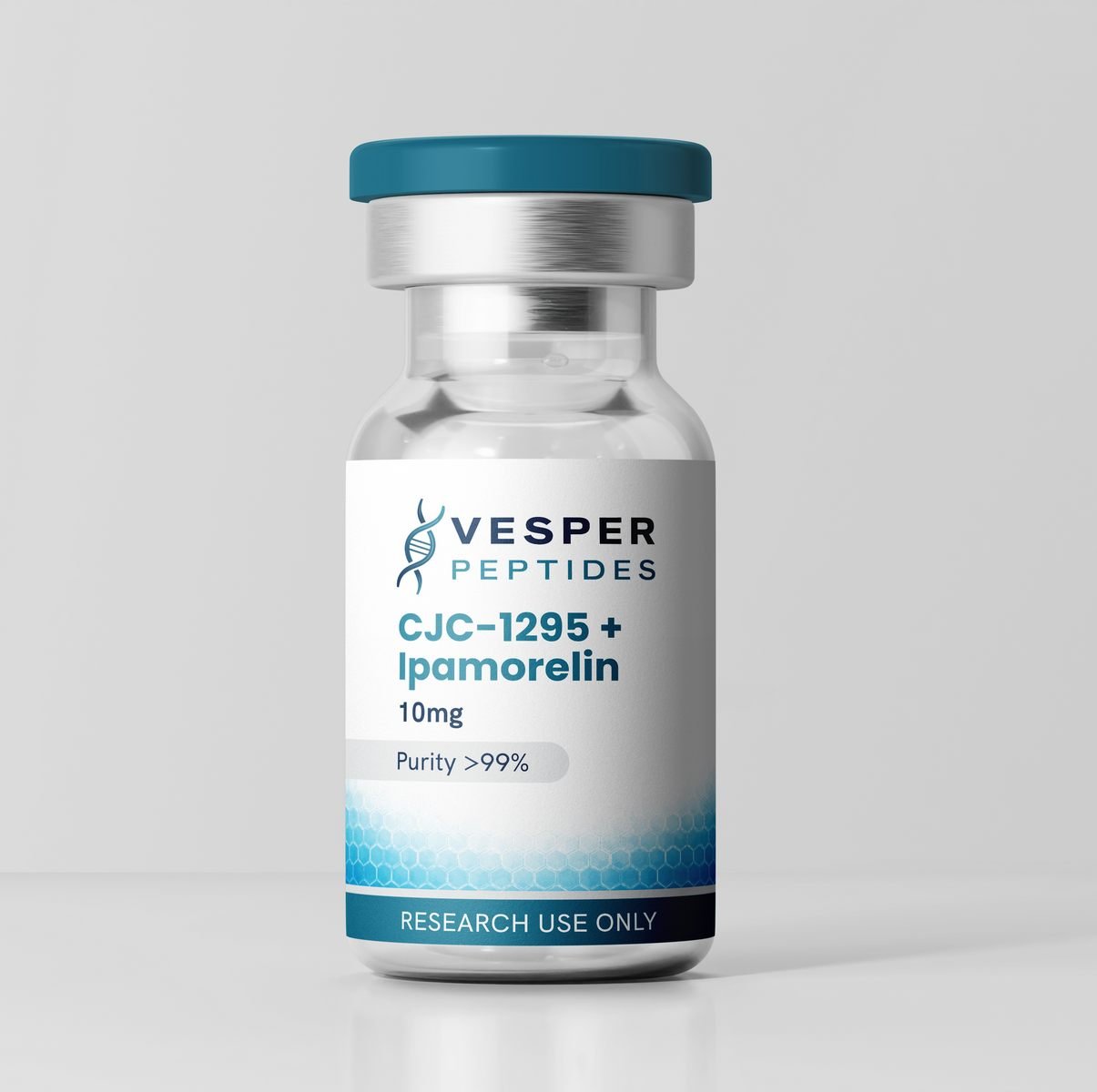
Compared to longer, structurally modified GHRH analogues such as CJC-1295, Sermorelin has a shorter half-life due to its susceptibility to DPP-IV cleavage at the Ala²-Asp³ bond and plasma protease degradation. Consequently, it produces a sharper, more transient GH secretion peak. Therefore, researchers specifically choose Sermorelin when their experimental design requires brief, well-defined GHRH receptor stimulation windows — for example, in GH stimulation tests, pituitary responsiveness assays, or acute GH secretion kinetic studies.
Sermorelin as a Reference Standard in GHRH Research
Sermorelin occupies a unique position in the GHRH research toolkit as the closest available synthetic approximation of the native GHRH active core. This makes it an indispensable reference compound in several research contexts. First, it serves as a physiological benchmark against which structurally modified GHRH analogues — such as CJC-1295 (No DAC), CJC-1295 (With DAC), and Tesamorelin — can be directly compared to quantify the pharmacokinetic and pharmacodynamic impact of their respective structural modifications. Second, its well-characterized receptor binding profile and GH secretory response make it ideal for GHRHR pharmacology studies requiring a defined, unmodified agonist reference compound. Furthermore, its extensive historical use in the research literature provides researchers with a rich body of comparative data to contextualize their own experimental findings.
Key Research Applications
Researchers actively use Sermorelin across multiple pituitary and GH axis research domains. Specifically, it supports:
- GHRH receptor pharmacology — Characterization of GHRHR binding kinetics, receptor affinity determinations, and cAMP signaling profiles using Sermorelin as an unmodified native-sequence reference agonist in cell-based assay systems.
- GH pulsatility and stimulation research — Studies examining the amplitude, duration, and kinetics of GH secretion pulses in response to defined, acute GHRH receptor stimulation in ex vivo pituitary preparations and preclinical models.
- Pituitary responsiveness assays — Experimental protocols using Sermorelin as a standardized GHRH stimulus to assess pituitary somatotroph secretory capacity and reserve in preclinical model systems.
- Comparative GHRH analogue research — Head-to-head benchmarking of Sermorelin against CJC-1295 (No DAC), CJC-1295 (With DAC), and Tesamorelin to characterize how structural modifications affect receptor binding affinity, half-life, and GH secretory response magnitude.
- Neuroendocrine axis research — Studies investigating the hypothalamic-pituitary axis regulation of GH secretion, including somatostatin interactions, GH feedback mechanisms, and pulsatile secretion pattern regulation.
- IGF-1 axis downstream studies — Research examining hepatic IGF-1 production and circulating IGF-1 levels following acute GHRHR stimulation with Sermorelin as a physiologically calibrated GH secretagogue.
Peptide Profile
| Parameter | Detail |
|---|---|
| Common Name | Sermorelin |
| Also Known As | GRF 1-29, GRF(1-29)NH₂, GHRH(1-29) |
| Sequence Length | 29 amino acids |
| Receptor Target | GHRH receptor (GHRHR) |
| Mechanism Class | Native GHRH fragment / GH secretagogue |
| Molecular Weight | ~3,358 Da |
| Form | Lyophilized powder |
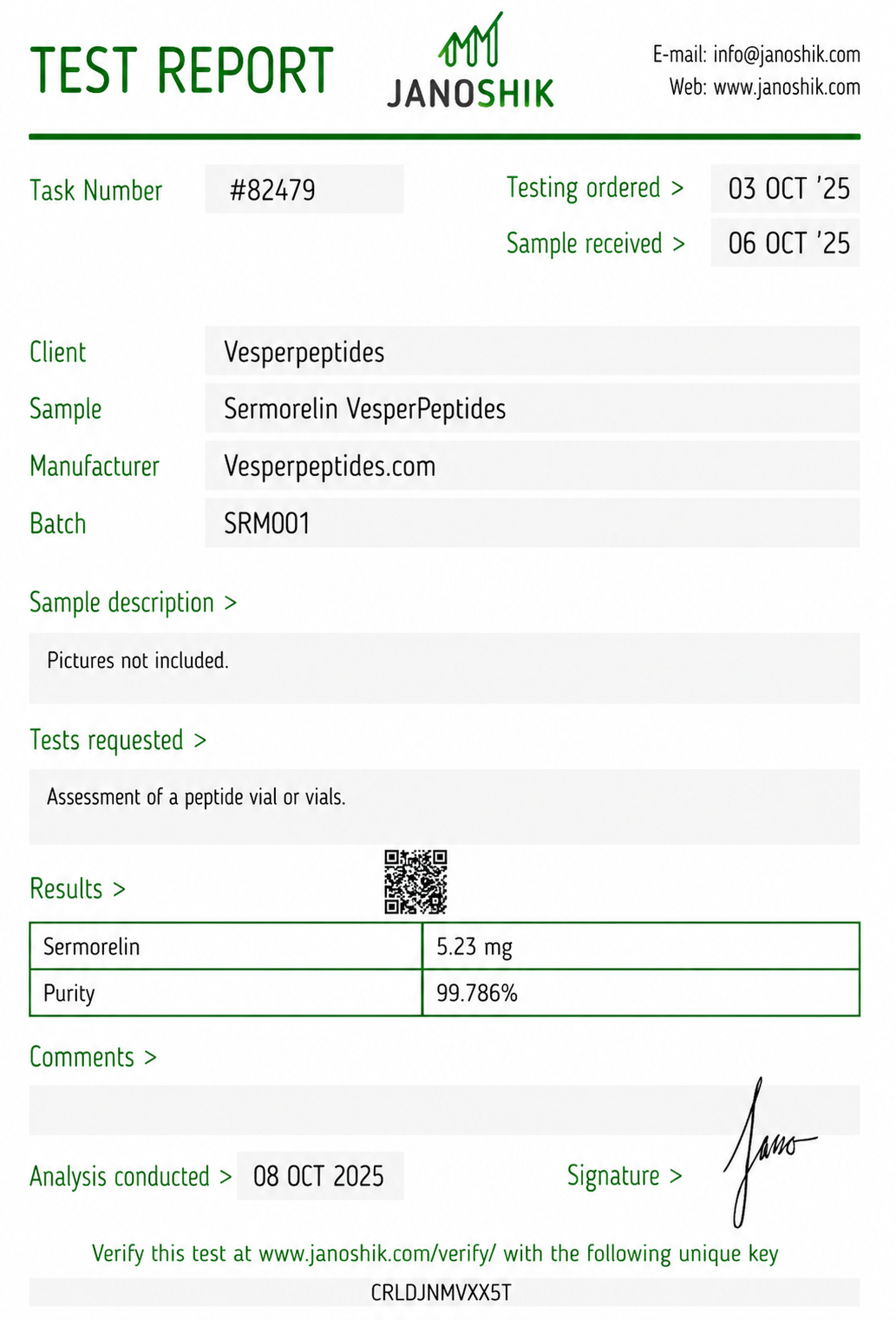
| Purity | ≥98% (HPLC verified) |
| Available Size | 10mg |
| Storage | −20°C (lyophilized); 4°C (reconstituted) |
| Reconstitution | Sterile bacteriostatic water |
Reconstitution Guidelines
Reconstitute Sermorelin with sterile bacteriostatic water. Add solvent slowly along the inner vial wall and gently swirl until the lyophilized powder fully dissolves. Do not shake or vortex. For a 10mg vial, researchers typically add 1–2ml of solvent to achieve a working concentration appropriate for their assay system. Additionally, prepare single-use aliquots before storage at 4°C to minimize freeze-thaw degradation across multi-session experimental protocols.
Storage Conditions
Store lyophilized Sermorelin vials at −20°C, protected from direct light and moisture. Furthermore, keep vials sealed until the point of reconstitution. Once reconstituted, maintain at 4°C and use within 28–30 days. Avoid repeated freeze-thaw cycles, as Sermorelin’s native-sequence structure makes it somewhat more susceptible to degradation than structurally stabilized GHRH analogues.
For research use only. Not intended for human or veterinary administration. This product is not a drug, supplement, or food product.
Reviews
There are no reviews yet.