
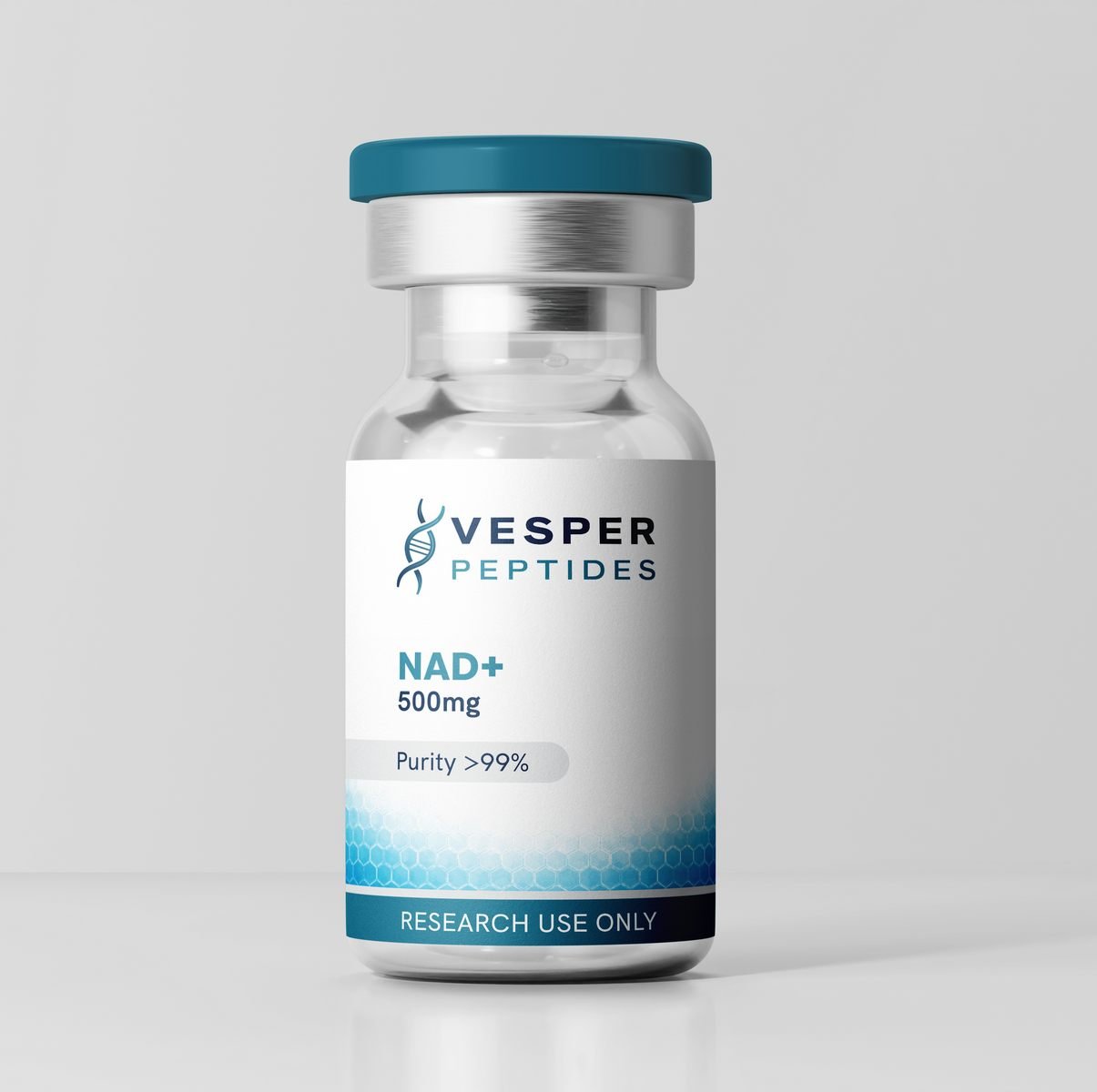
NAD+ — Research-Grade Nicotinamide Adenine Dinucleotide Coenzyme
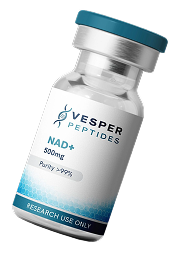
NAD+ (Nicotinamide Adenine Dinucleotide) is one of the most fundamental and broadly studied molecules in cell biology. It functions simultaneously as a hydride-transfer coenzyme in oxidative metabolism and as a consumed substrate for a growing family of NAD+-dependent enzymes. Researchers across aging biology, mitochondrial science, cancer metabolism, and metabolic disease use this NAD+ research compound as both a direct experimental substrate and a biochemical readout in a wide range of assay formats. Furthermore, the 500mg format provides sufficient material for large-scale, extended, or multi-arm research protocols without requiring frequent reordering.
Mechanism of Action and Biological Roles
NAD+ participates in cellular biology through two distinct and equally important functional roles.
As a redox coenzyme, NAD+ accepts hydride equivalents from metabolic intermediates during glycolysis, the citric acid cycle, and fatty acid β-oxidation. It thereby converts to NADH, which subsequently donates electrons to the mitochondrial electron transport chain (ETC) to drive ATP synthesis through oxidative phosphorylation. Consequently, cellular NAD+/NADH ratios directly reflect the bioenergetic state of the cell and serve as a key metabolic readout in energy metabolism research.
As an enzyme substrate, NAD+ is stoichiometrically consumed by three major enzyme families. Sirtuins (SIRT1–SIRT7) use NAD+ to catalyse deacetylation and deacylation of target proteins, including histones, p53, FOXO transcription factors, and PGC-1α. As a result, sirtuin activity directly links NAD+ availability to epigenetic regulation, stress response, and mitochondrial biogenesis. Additionally, poly(ADP-ribose) polymerases (PARPs) consume NAD+ to synthesize poly(ADP-ribose) chains on target proteins in response to DNA strand breaks — a central mechanism in DNA damage repair research. Furthermore, CD38 and SARM1 consume NAD+ in inflammatory signaling and axonal degeneration pathways respectively.
NAD+ Decline as a Hallmark of Aging
Intracellular NAD+ levels decline progressively with biological age across multiple model organisms — from yeast and nematodes to rodents and primates. This decline correlates with reduced sirtuin activity, impaired mitochondrial function, increased PARP activation from accumulating DNA damage, and elevated CD38 expression in aged tissues. Consequently, NAD+ repletion strategies have become a central focus of geroscience research. Researchers use this nicotinamide adenine dinucleotide research compound directly in cell culture and biochemical systems to model NAD+ sufficiency and depletion states experimentally.
Key Research Applications
Researchers actively use NAD+ across a broad range of experimental disciplines. Specifically, it supports:
- Sirtuin activity assays — Direct substrate provision for in vitro SIRT1–SIRT7 deacylase activity measurements using fluorometric, radiometric, and mass spectrometry-based assay formats.
- PARP enzyme kinetics — Substrate for characterizing PARP1, PARP2, and PARP3 catalytic activity, poly(ADP-ribose) chain synthesis rates, and inhibitor IC₅₀ determinations in biochemical assay systems.
- Mitochondrial bioenergetics — Use as a substrate and redox readout in isolated mitochondria preparations, Seahorse XF respirometry assays, and ETC complex activity measurements.
- NAD+ metabolism research — Studies examining biosynthesis pathways (de novo, Preiss-Handler, salvage), consumption rates, and compartmentalization between nuclear, cytoplasmic, and mitochondrial pools.
- Aging biology research — Experimental models investigating NAD+ decline mechanisms, repletion strategies, and downstream effects on sirtuin activity, DNA repair capacity, and mitochondrial network integrity in aged cells.
- DNA damage and repair research — Studies examining PARP-dependent NAD+ consumption kinetics in response to genotoxic stress and their effects on cellular NAD+ pools and downstream sirtuin activity.
- Cancer metabolism research — Investigation of NAD+ biosynthesis dependencies, NAMPT inhibitor effects, and metabolic vulnerabilities in tumour cell lines with altered NAD+ homeostasis.
Large-Format 500mg Research Vial
Most NAD+ research compounds ship in small quantities suited for limited experimental runs. This 500mg lyophilized vial addresses the needs of researchers running extended study series, multi-dose titration experiments, or large-scale biochemical screens. Furthermore, the large format reduces lot-to-lot variability across a research program by enabling the use of a single vial batch throughout an entire experimental series. Researchers studying aging, mitochondrial function, or sirtuin biology therefore benefit particularly from this format.
Compound Profile
| Parameter | Detail |
|---|---|
| Common Name | NAD+ |
| Full Name | Nicotinamide Adenine Dinucleotide (oxidized form) |
| CAS Number | 53-84-9 |
| Molecular Weight | 663.43 Da |
| Enzyme Families Supported | Sirtuins (SIRT1–7), PARPs (1–3), CD38, SARM1 |
| Form | Lyophilized powder |
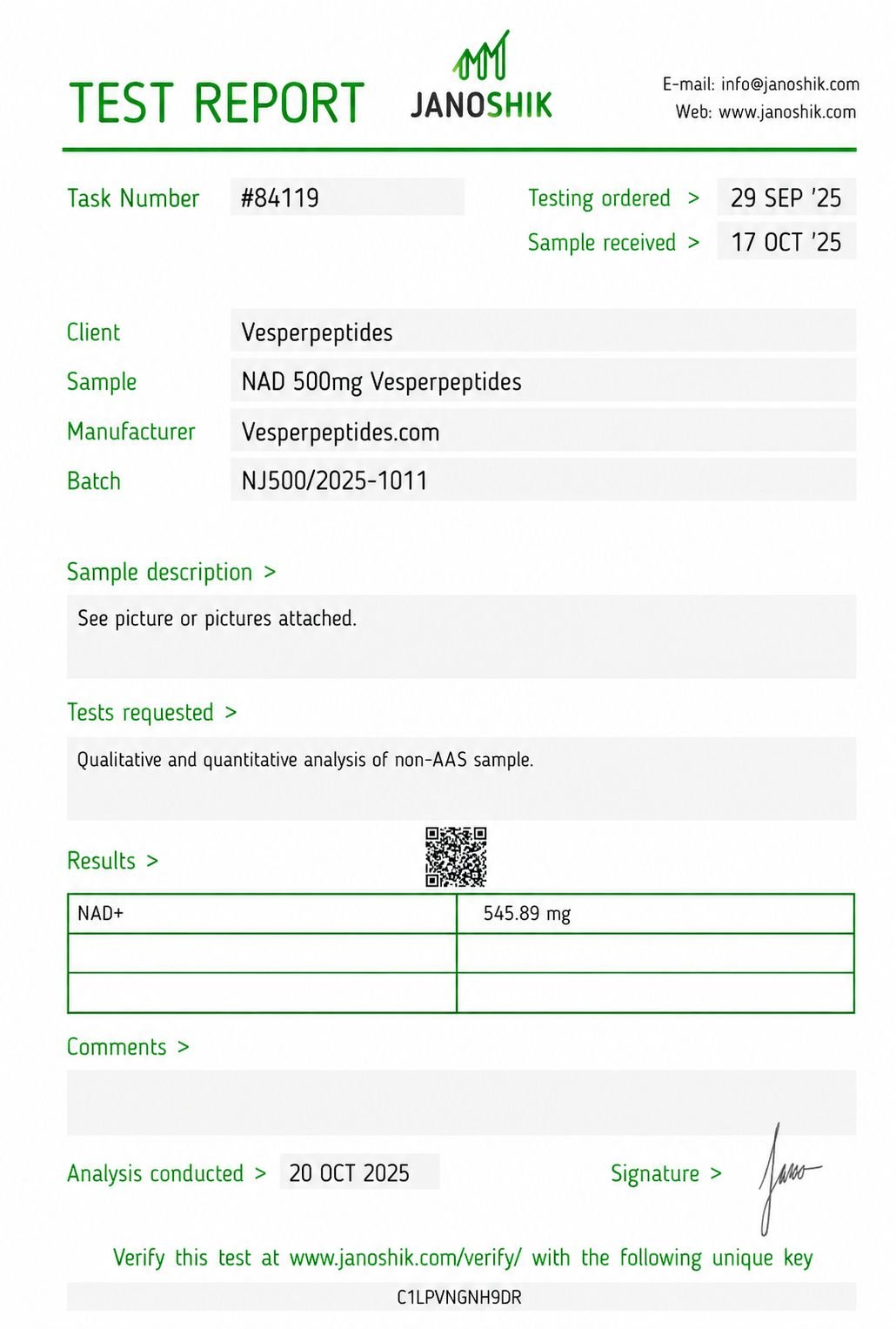
| Purity | ≥98% (HPLC verified) |
| Available Size | 500mg |
| Storage | −20°C (lyophilized); use promptly once reconstituted |
| Reconstitution | Sterile water or PBS (pH 7.0–7.4) |
| Solubility | Freely water-soluble |
Reconstitution Guidelines
Reconstitute NAD+ with sterile water or phosphate-buffered saline at pH 7.0–7.4. NAD+ dissolves readily and completely in aqueous solution at room temperature. For biochemical assay applications, prepare fresh working solutions on the day of the experiment where possible, as NAD+ undergoes gradual hydrolysis at neutral pH over time. Additionally, for stock solutions, prepare at high concentration (e.g., 100mM), aliquot into single-use volumes, and store at −80°C to maximize stability. Avoid repeated freeze-thaw cycles of reconstituted stock solutions.
Storage Conditions
Store lyophilized NAD+ at −20°C or below, protected from light and moisture. Furthermore, keep vials tightly sealed until the point of reconstitution. The lyophilized form is significantly more stable than aqueous solutions and stores well at −20°C for extended periods. Once reconstituted, use promptly or store aliquots at −80°C for short-term stock preservation.
For research use only. Not intended for human or veterinary administration. This product is not a drug, supplement, or food product.
Reviews
There are no reviews yet.