
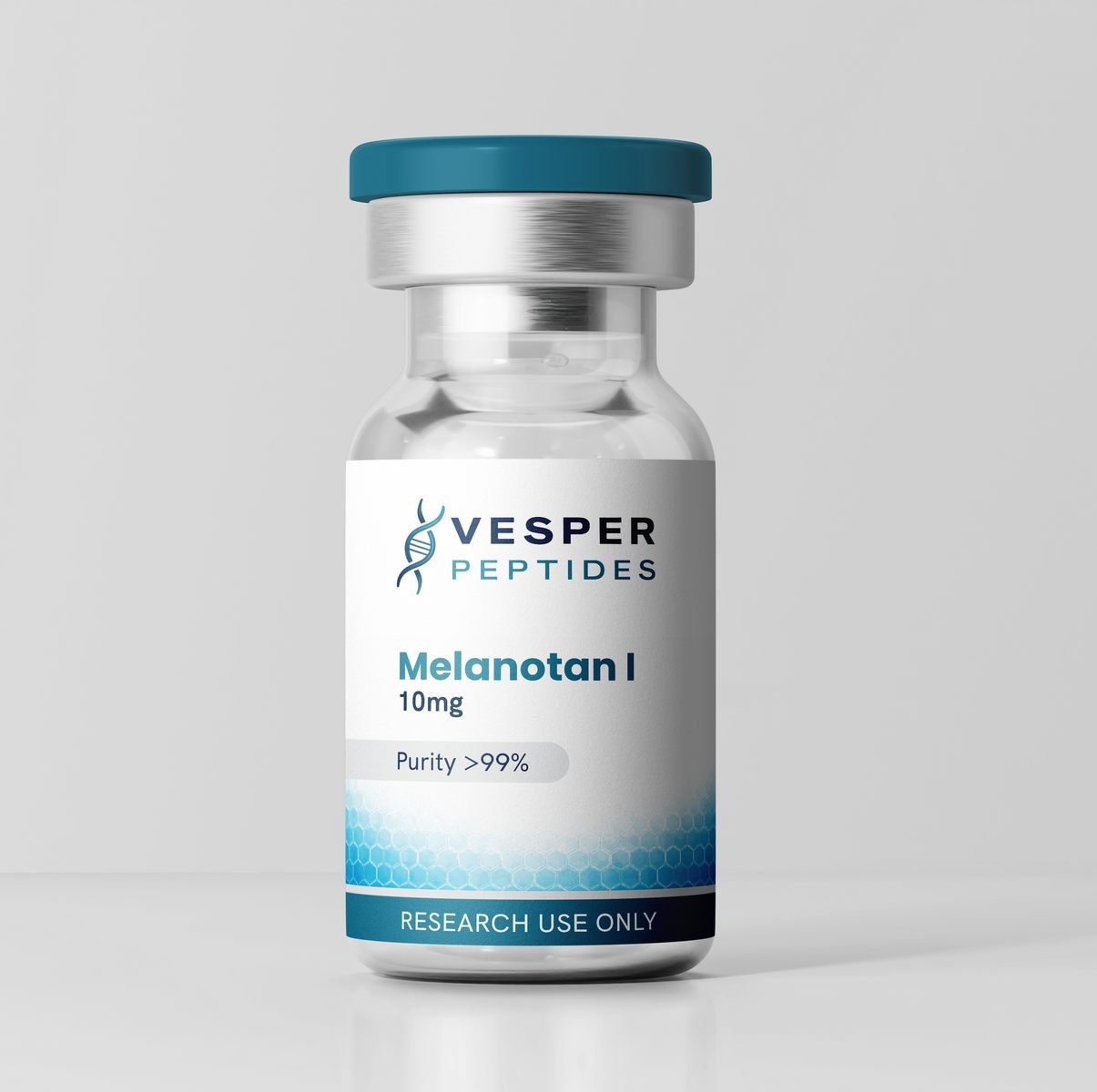
Melanotan I — MC1R Agonist Research Peptide for Pigmentation Biology
Melanotan I (Afamelanotide; [Nle⁴, D-Phe⁷]-α-MSH) is a synthetic linear α-MSH analogue engineered for enhanced MC1R binding affinity and metabolic stability through two key substitutions — norleucine at position 4 and D-phenylalanine at position 7. These modifications increase receptor binding potency and resistance to enzymatic degradation relative to native α-MSH. Researchers in dermatology, pigmentation biology, and melanocortin pharmacology use this Melanotan I research peptide to study MC1R-driven melanogenesis, UV-independent melanin synthesis, and photoprotection mechanisms in melanocyte and skin biology experimental systems. Furthermore, its high MC1R selectivity makes it the definitive tool compound for researchers specifically studying the MC1R-melanogenesis axis.
Mechanism of Action
Melanotan I binds MC1R on melanocytes with superpotent affinity. Upon receptor engagement, it activates Gs-protein coupled adenylyl cyclase, elevating intracellular cAMP. This cAMP elevation activates PKA, which phosphorylates CREB and drives transcriptional upregulation of MITF — the master transcription factor for melanogenesis gene expression. As a result, Melanotan I actively stimulates the eumelanin synthesis pathway, driving the sequential enzymatic steps of tyrosinase activation, DOPA oxidation, and melanin polymer assembly in melanocytes.
Crucially, Melanotan I drives this melanogenesis program independently of UV radiation stimulation. Consequently, researchers use it to study UV-independent melanogenesis mechanisms — providing clean experimental separation between UV-driven DNA damage responses and receptor-mediated pigmentation signaling. Furthermore, increased eumelanin production driven by MC1R activation enhances UV photon absorption capacity in keratinocytes, providing a basis for photoprotection mechanism research.
Key Research Applications
- MC1R pharmacology research — Characterization of MC1R binding kinetics, cAMP signaling profiles, receptor desensitization, and subtype selectivity using Melanotan I as a high-affinity reference MC1R agonist.
- Melanogenesis research — Studies examining MITF activation, tyrosinase expression, eumelanin versus phaeomelanin synthesis ratio regulation, and melanin transfer mechanisms in melanocyte model systems.
- UV-independent melanin synthesis — Investigation of receptor-driven melanogenesis pathways in the absence of UV stimulation — enabling clean separation of UV damage and receptor signaling contributions.
- Photoprotection mechanism research — Studies examining how MC1R-driven eumelanin accumulation affects UV photon absorption, DNA protection, and reactive oxygen species scavenging in skin cell systems.
- Comparative melanocortin receptor research — Benchmarking Melanotan I against Melanotan II and PT-141 to characterize the contribution of MC1R-selective vs. multi-receptor engagement to melanogenesis and other melanocortin-mediated responses.
Peptide Profile
| Parameter | Detail |
|---|---|
| Common Name | Melanotan I |
| Also Known As | Afamelanotide, [Nle⁴,D-Phe⁷]-α-MSH |
| Receptor Target | MC1R (primary) |
| Selectivity | High MC1R selectivity |
| Molecular Weight | ~1,647 Da |
| Form | Lyophilized powder |
| Purity | ≥98% (HPLC verified) |
| Available Size | 10mg |
| Storage | −20°C (lyophilized); 4°C (reconstituted) |
| Reconstitution | Sterile bacteriostatic water or dilute acetic acid |
Reconstitution & Storage
Reconstitute with sterile bacteriostatic water or dilute acetic acid (0.1%) for initial solubilization if needed. Add solvent slowly along the vial wall and swirl gently. Store lyophilized vials at −20°C, protected from light. Once reconstituted, maintain at 4°C and use within 28 days. Avoid repeated freeze-thaw cycles.
For research use only. Not intended for human or veterinary administration.
Reviews
There are no reviews yet.