
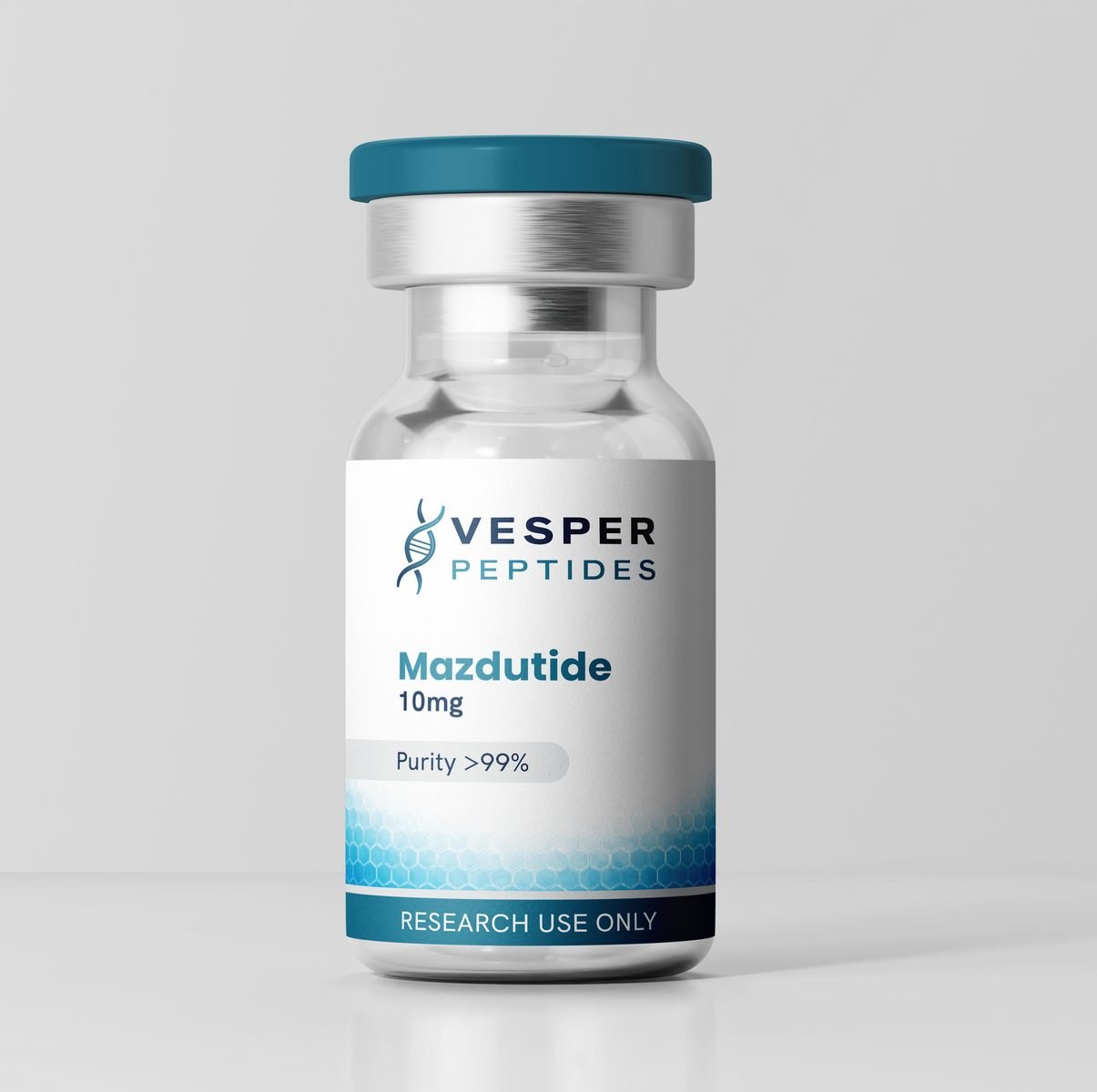
Mazdutide — GLP-1R & GcgR Dual Agonist Research Peptide
Mazdutide (IBI362) is a synthetic long-acting dual agonist peptide targeting the GLP-1 receptor (GLP-1R) and the glucagon receptor (GcgR) simultaneously. Researchers in metabolic biology, endocrinology, and pharmacology use this Mazdutide research peptide to study the combined metabolic effects of GLP-1R and GcgR co-activation on insulin secretion, energy expenditure, thermogenesis, and hepatic glucose metabolism. Furthermore, its GLP-1R/GcgR dual receptor profile provides a distinct mechanistic combination compared to GLP-1R/GIPR dual agonists such as Tirzepatide — enabling researchers to study the specific contribution of glucagon receptor activation to metabolic outcomes independently of GIP receptor signaling.
Mechanism of Action
Mazdutide engages two receptors with complementary and partially opposing metabolic effects — a combination that produces distinct net metabolic outcomes of significant research interest.
At GLP-1R — Mazdutide drives glucose-dependent insulin secretion, suppresses glucagon from pancreatic alpha-cells, slows gastric emptying, and activates hypothalamic satiety circuits. As a result, it produces glycaemic control and satiety signaling consistent with other GLP-1R agonist compounds in the GLP-1 research peptide range.
At GcgR — Mazdutide simultaneously activates glucagon receptor signaling in the liver and adipose tissue. GcgR activation drives hepatic glucose output, promotes fatty acid oxidation, activates brown adipose tissue thermogenesis through cAMP/PKA-mediated UCP-1 upregulation, and increases energy expenditure. Consequently, the net metabolic effect of combined GLP-1R/GcgR activation reflects increased energy expenditure alongside improved glycaemic control — a combination that makes Mazdutide particularly relevant in obesity and metabolic disease research.
Furthermore, because Mazdutide lacks GIPR activity — unlike Retatrutide and Tirzepatide — it allows researchers to study the GLP-1R/GcgR dual combination in isolation from GIP receptor confounders. This makes it a critical tool compound in comparative incretin pharmacology research designs.
Key Research Applications
- GLP-1R/GcgR dual pharmacology — Characterization of combined GLP-1R and GcgR activation kinetics, cAMP signaling profiles, and receptor-specific downstream effector engagement in metabolic cell systems.
- Energy expenditure research — Studies examining GcgR-mediated thermogenesis, UCP-1 upregulation in brown adipose tissue, and basal metabolic rate modulation through dual GLP-1R/GcgR activation.
- Glucose homeostasis research — Investigation of the combined effects of GLP-1R-driven insulin secretion and GcgR-driven hepatic glucose output on net glucose balance in preclinical metabolic models.
- Hepatic metabolism research — Studies examining GcgR-mediated fatty acid oxidation, hepatic glycogenolysis, and lipid metabolism effects alongside GLP-1R-driven insulin sensitization in liver-focused research protocols.
- Comparative incretin receptor research — Experimental designs benchmarking Mazdutide (GLP-1R/GcgR) against Tirzepatide (GLP-1R/GIPR) and Retatrutide (GLP-1R/GIPR/GcgR) to characterize the isolated contribution of GcgR activation versus GIPR activation to metabolic outcomes.
- Body composition research — Studies examining combined GLP-1R/GcgR effects on fat mass reduction, lean mass preservation, and adipose tissue remodeling in metabolic research models.
Peptide Profile
| Parameter | Detail |
|---|---|
| Common Name | Mazdutide |
| Also Known As | IBI362 |
| Receptor Targets | GLP-1R, GcgR |
| Agonist Class | Dual GLP-1R/GcgR agonist |
| Form | Lyophilized powder |
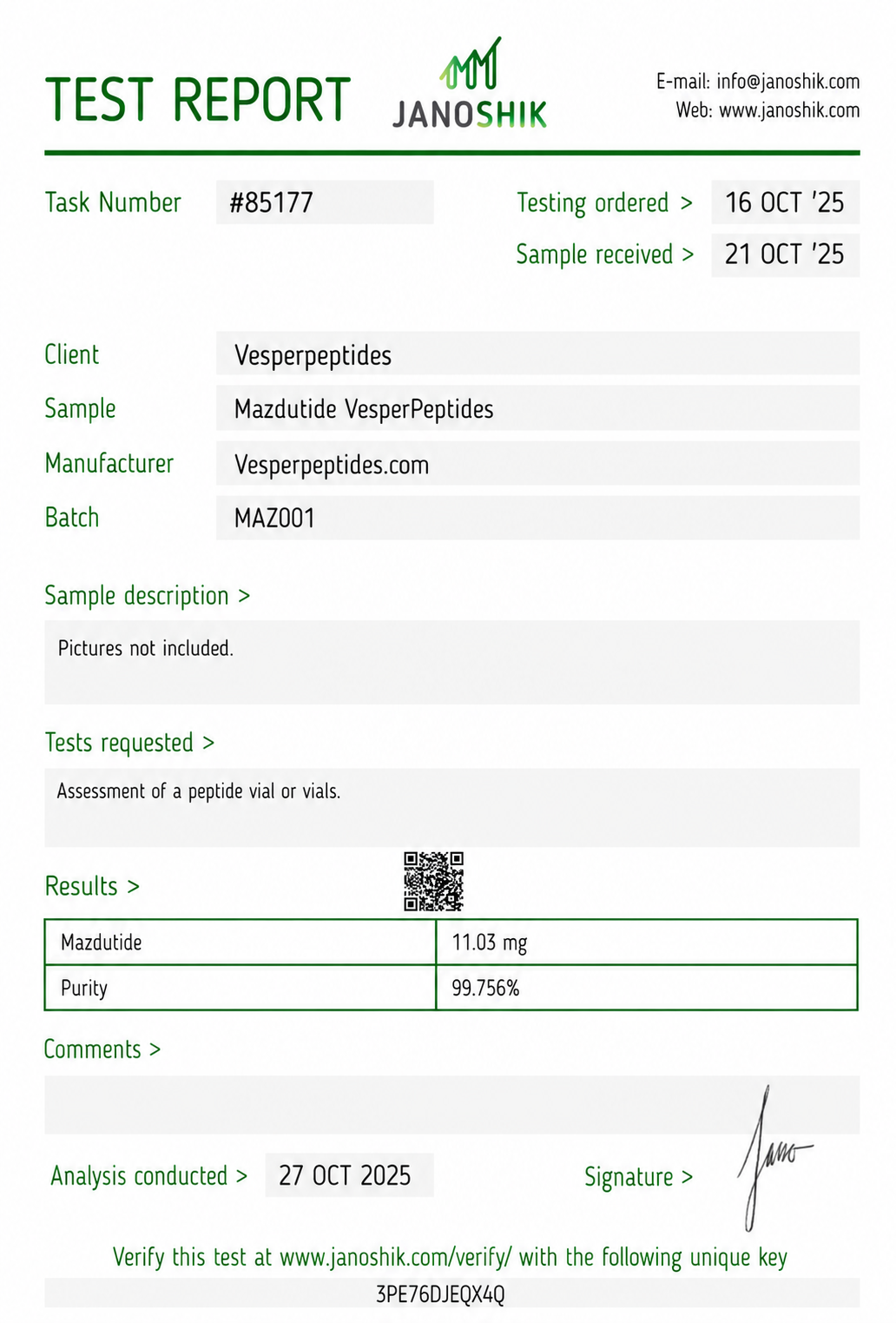
| Purity | ≥98% (HPLC verified) |
| Available Size | 10mg |
| Storage | −20°C (lyophilized); 4°C (reconstituted) |
| Reconstitution | Sterile bacteriostatic water |
Reconstitution & Storage
Reconstitute with sterile bacteriostatic water. Add solvent slowly along the vial wall and swirl gently until fully dissolved. Store lyophilized vials at −20°C, protected from light. Once reconstituted, maintain at 4°C and use within 28 days. Avoid repeated freeze-thaw cycles.
For research use only. Not intended for human or veterinary administration.
Reviews
There are no reviews yet.