
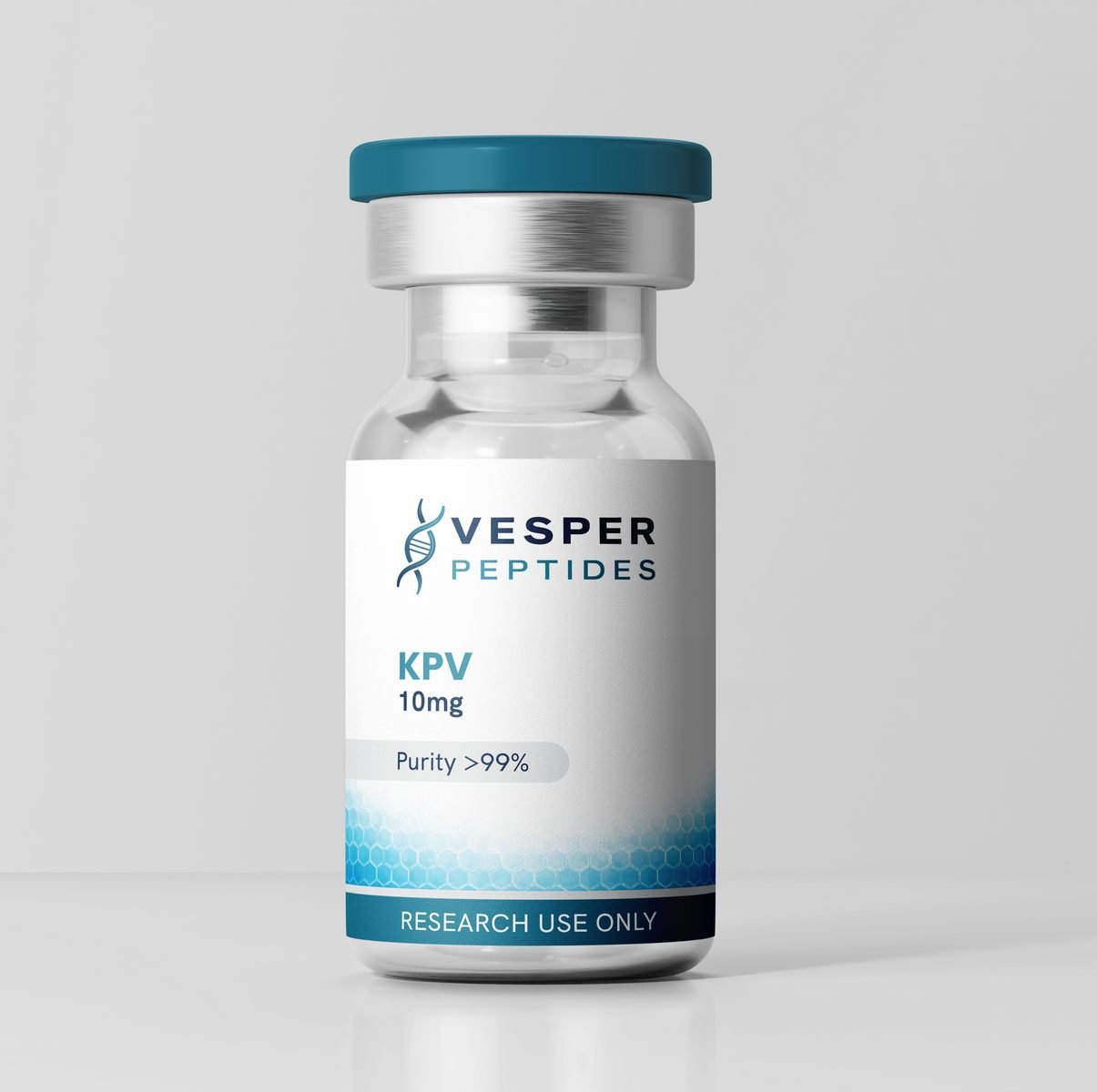
KPV — Alpha-MSH C-Terminal Tripeptide Anti-Inflammatory Research Peptide
KPV (Lys-Pro-Val) is a synthetic tripeptide corresponding to the C-terminal three amino acids of alpha-melanocyte stimulating hormone (α-MSH). It retains the core anti-inflammatory activity of full-length α-MSH while offering superior aqueous stability and resistance to enzymatic degradation. Researchers in inflammation biology, gastrointestinal research, and wound healing science use this KPV research peptide to study melanocortin receptor-mediated anti-inflammatory signaling, NF-κB pathway inhibition, and cytokine regulation in intestinal and cutaneous experimental systems. Furthermore, its minimal tripeptide structure provides researchers with the most structurally simplified and mechanistically clean melanocortin anti-inflammatory tool available.
Mechanism of Action
KPV exerts its anti-inflammatory effects primarily through MC1R and MC3R engagement, activating Gs-protein coupled cAMP signaling in immune and epithelial cells. Specifically, elevated cAMP downstream of melanocortin receptor activation suppresses NF-κB nuclear translocation — the master transcription factor driving pro-inflammatory gene expression. As a result, KPV reduces TNF-α, IL-1β, IL-6, and IL-8 production in stimulated immune cells and intestinal epithelial cells.
Additionally, KPV directly suppresses MAPK and AP-1 signaling pathways in inflamed cells. Furthermore, it modulates intestinal epithelial barrier integrity by promoting tight junction protein expression and epithelial repair signaling. Consequently, researchers studying intestinal inflammation and mucosal healing specifically use KPV as a clean melanocortin anti-inflammatory tool in gastrointestinal models.
Key Research Applications
- NF-κB inhibition research — Studies examining KPV-mediated NF-κB suppression in macrophages, dendritic cells, and intestinal epithelial cells under LPS, TNF-α, and IL-1β stimulation conditions.
- Inflammatory bowel disease research — Preclinical gastrointestinal models examining KPV effects on intestinal epithelial barrier integrity, mucosal inflammation, and cytokine profiles in colitis models.
- Wound healing research — Studies investigating KPV effects on keratinocyte migration, re-epithelialization, and anti-inflammatory signaling in cutaneous wound healing models.
- Cytokine regulation research — Investigation of KPV-driven suppression of TNF-α, IL-1β, and IL-6 production in stimulated macrophage and monocyte systems.
- Melanocortin receptor pharmacology — Studies using KPV as a minimal active fragment reference compound for characterizing the anti-inflammatory pharmacophore of α-MSH and comparing against full-length melanocortin peptides.
Peptide Profile
| Parameter | Detail |
|---|---|
| Common Name | KPV |
| Full Name | Lys-Pro-Val |
| Derived From | α-MSH C-terminal tripeptide |
| Receptor Targets | MC1R, MC3R |
| Key Mechanisms | NF-κB inhibition, cAMP elevation, cytokine suppression |
| Molecular Weight | ~341 Da |
| Form | Lyophilized powder |
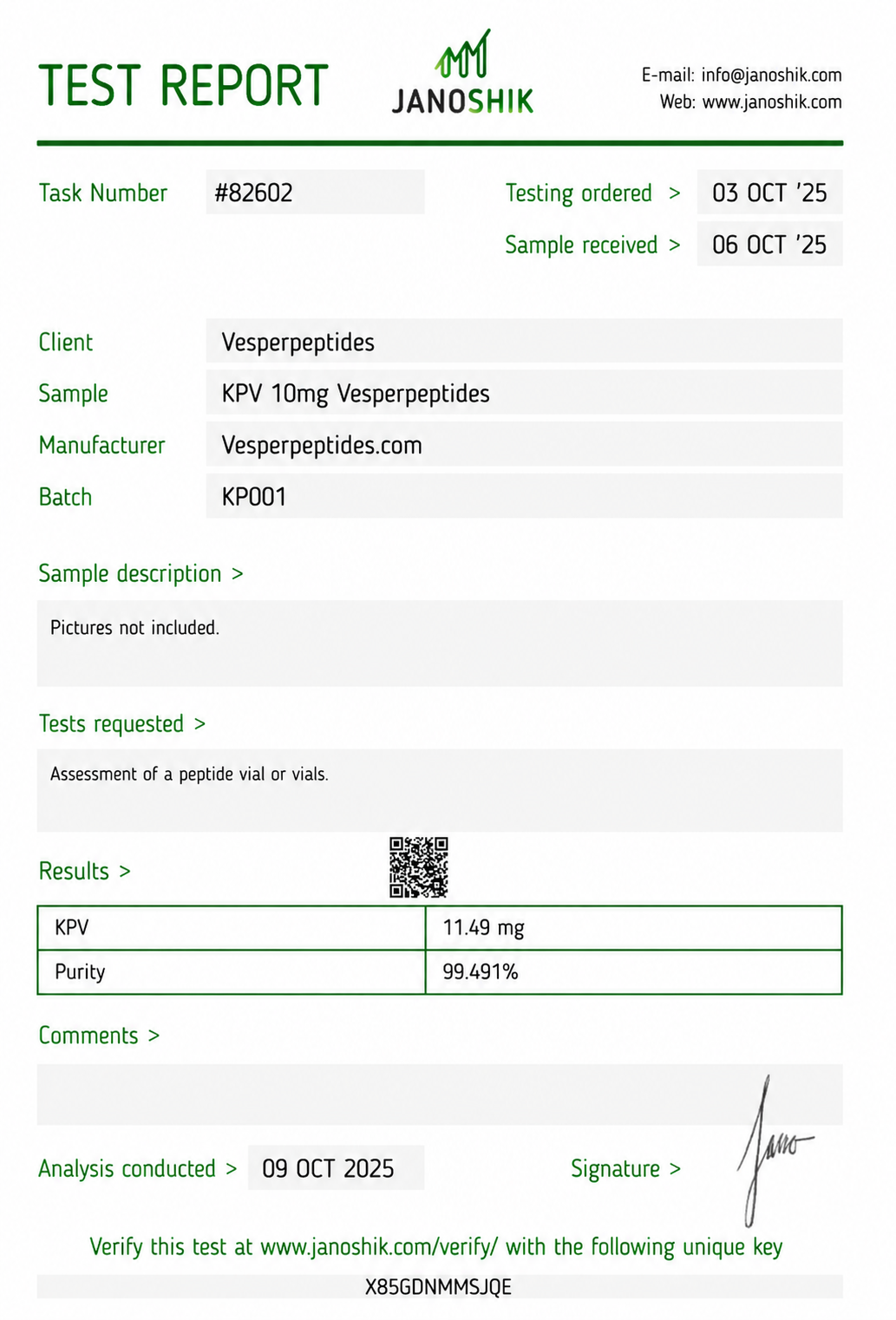
| Purity | ≥98% (HPLC verified) |
| Available Size | 10mg |
| Storage | −20°C (lyophilized); 4°C (reconstituted) |
| Reconstitution | Sterile bacteriostatic water |
Reconstitution & Storage
Reconstitute with sterile bacteriostatic water. KPV is freely water-soluble. Add solvent slowly along the vial wall and swirl gently. Store lyophilized vials at −20°C. Once reconstituted, maintain at 4°C and use within 28 days. Avoid repeated freeze-thaw cycles.
For research use only. Not intended for human or veterinary administration.
Reviews
There are no reviews yet.