
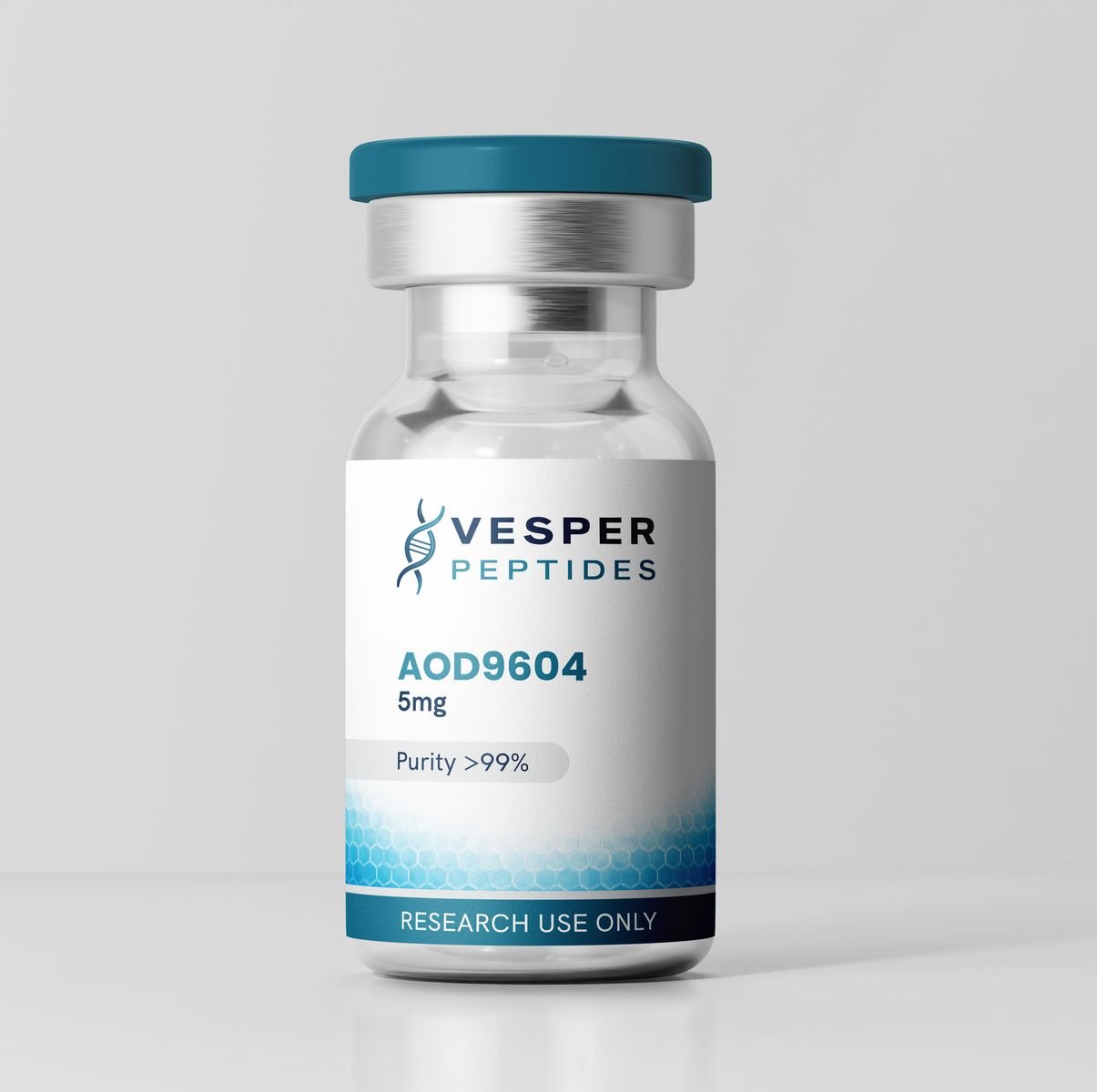
AOD9604 — Lipolytic hGH C-Terminal Fragment Research Peptide
AOD9604 is a synthetic, stabilized peptide analogue derived from the C-terminal region of human growth hormone (amino acids 177–191), with an additional tyrosine residue at the N-terminus for enhanced stability. Researchers in metabolic biology, adipocyte science, and pharmacology use it as a selective tool compound for studying lipolysis stimulation and lipogenesis inhibition in fat cell models. Furthermore, its IGF-1-independent mechanism of action distinguishes it clearly from intact GH, making this AOD9604 research peptide uniquely valuable in studies that require fat-specific metabolic activity without confounding somatotropic effects.
Mechanism of Action
AOD9604 exerts its lipolytic effects through a mechanism that is entirely separate from the classical GH receptor/JAK2/STAT5 signaling pathway. Instead, it stimulates β3-adrenergic receptors on adipocytes directly. As a result, it activates hormone-sensitive lipase (HSL) and promotes the breakdown of stored triglycerides into free fatty acids and glycerol — the core biochemical process of lipolysis.
Additionally, AOD9604 inhibits lipogenesis by suppressing acetyl-CoA carboxylase activity in adipocytes, thereby reducing de novo fatty acid synthesis. Consequently, it simultaneously promotes fat breakdown and inhibits fat storage through two complementary adipocyte-level mechanisms. Importantly, it does not activate the GH receptor or stimulate IGF-1 production. Therefore, researchers studying fat metabolism in isolation — without somatotropic confounders — specifically choose this hGH fragment research peptide for their experimental systems.
Key Research Applications
Researchers actively use AOD9604 across several specialized adipocyte and metabolic research domains. Specifically, it supports:
- Lipolysis mechanism research — In vitro studies examining β3-adrenergic receptor-mediated HSL activation, triglyceride hydrolysis kinetics, and free fatty acid release in primary adipocyte and cell line models.
- Lipogenesis inhibition studies — Investigation of acetyl-CoA carboxylase suppression and its downstream effects on de novo lipid synthesis in adipocyte experimental systems.
- IGF-1-independent fat metabolism research — Studies specifically designed to isolate GH-related lipolytic activity from IGF-1-mediated anabolic and proliferative effects — a critical experimental control in GH biology research.
- Adipocyte biology — Research into white adipose tissue (WAT) remodeling, adipocyte differentiation, and lipid droplet dynamics in response to β3-adrenergic receptor stimulation.
- Comparative GH fragment research — Benchmarking studies comparing AOD9604 activity against intact GH and other C-terminal GH fragments to characterize the minimal active sequence responsible for lipolytic activity.
- Metabolic disease models — Preclinical studies using AOD9604 as a tool to investigate selective adipose tissue-targeted interventions in high-fat diet or obesity-related experimental models.
Selectivity Advantage in Fat Metabolism Research
Intact human growth hormone stimulates both lipolysis and IGF-1-mediated anabolic effects simultaneously. This dual activity creates significant experimental confounding in fat metabolism studies. AOD9604, however, retains only the lipolytic C-terminal region of GH. Consequently, researchers can study GH-related fat metabolism mechanisms in complete isolation from growth-promoting IGF-1 effects. Furthermore, this selectivity makes AOD9604 an important reference compound in studies aimed at distinguishing the metabolic and anabolic arms of GH signaling.
Peptide Profile
| Parameter | Detail |
|---|---|
| Common Name | AOD9604 |
| Full Name | Anti-Obesity Drug 9604 |
| Derived From | hGH C-terminal fragment (aa 177–191) |
| Receptor Target | β3-Adrenergic receptor (adipocytes) |
| Mechanism Class | Selective lipolytic peptide |
| Molecular Weight | ~1,817 Da |
| Form | Lyophilized powder |
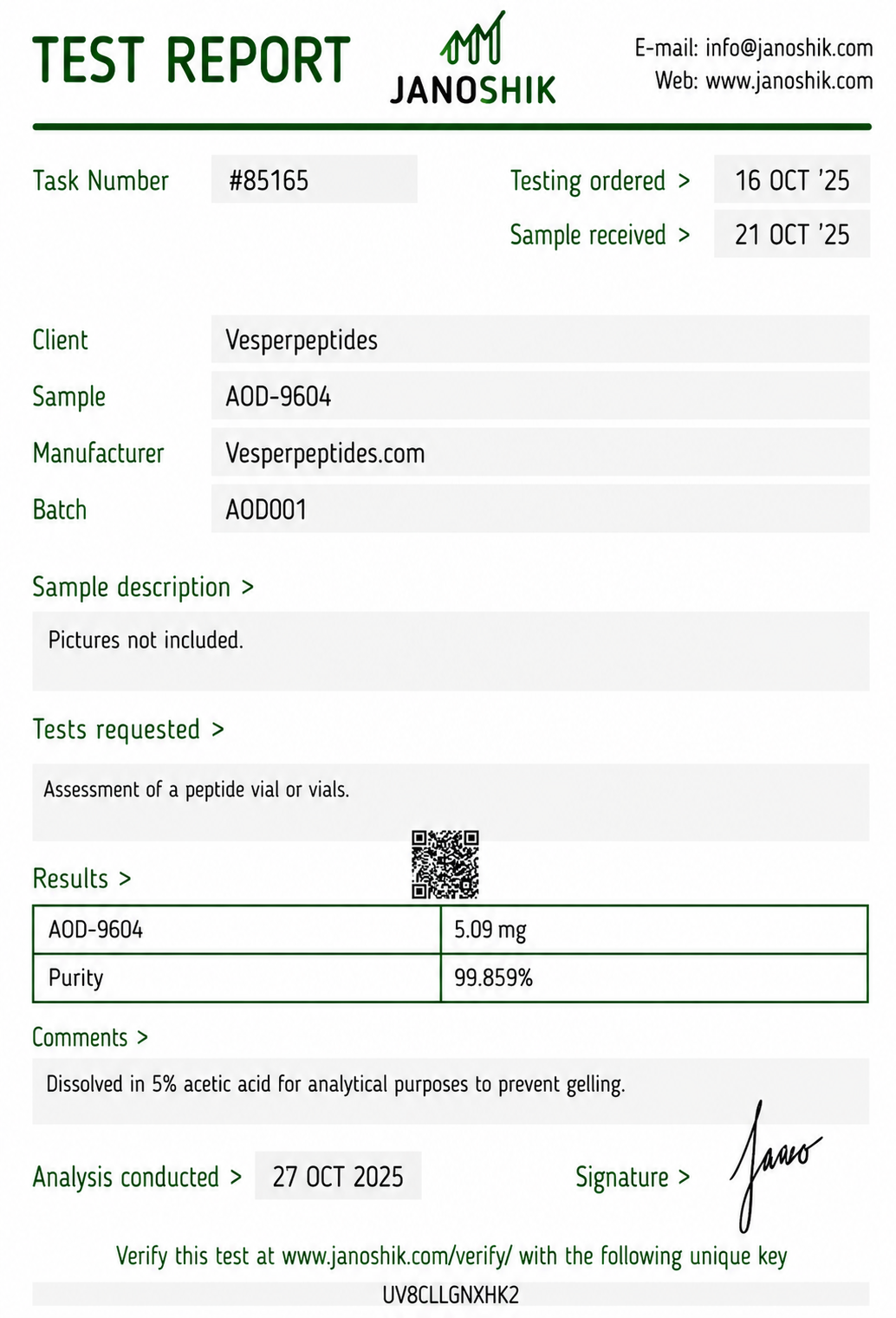
| Purity | ≥98% (HPLC verified) |
| Available Sizes | 5mg, 10mg |
| Storage | −20°C (lyophilized); 4°C (reconstituted) |
| Reconstitution | Sterile bacteriostatic water |
Reconstitution Guidelines
Reconstitute AOD9604 with sterile bacteriostatic water. Add solvent slowly along the inner vial wall and gently swirl until the lyophilized powder fully dissolves. Do not shake or vortex. For a 5mg vial, researchers typically add 1ml of solvent to achieve a suitable working concentration. Furthermore, AOD9604 dissolves readily in aqueous solution and does not require acetic acid for initial solubilization. Prepare single-use aliquots before storage at 4°C to minimize freeze-thaw degradation across extended studies.
Storage Conditions
Store lyophilized AOD9604 vials at −20°C, away from direct light and moisture. Keep vials sealed until the point of reconstitution. Furthermore, once reconstituted, maintain solutions at 4°C and use within 28–30 days. Avoid repeated freeze-thaw cycles, as these progressively reduce peptide integrity and biological activity in assay systems.
For research use only. Not intended for human or veterinary administration. This product is not a drug, supplement, or food product.
Reviews
There are no reviews yet.