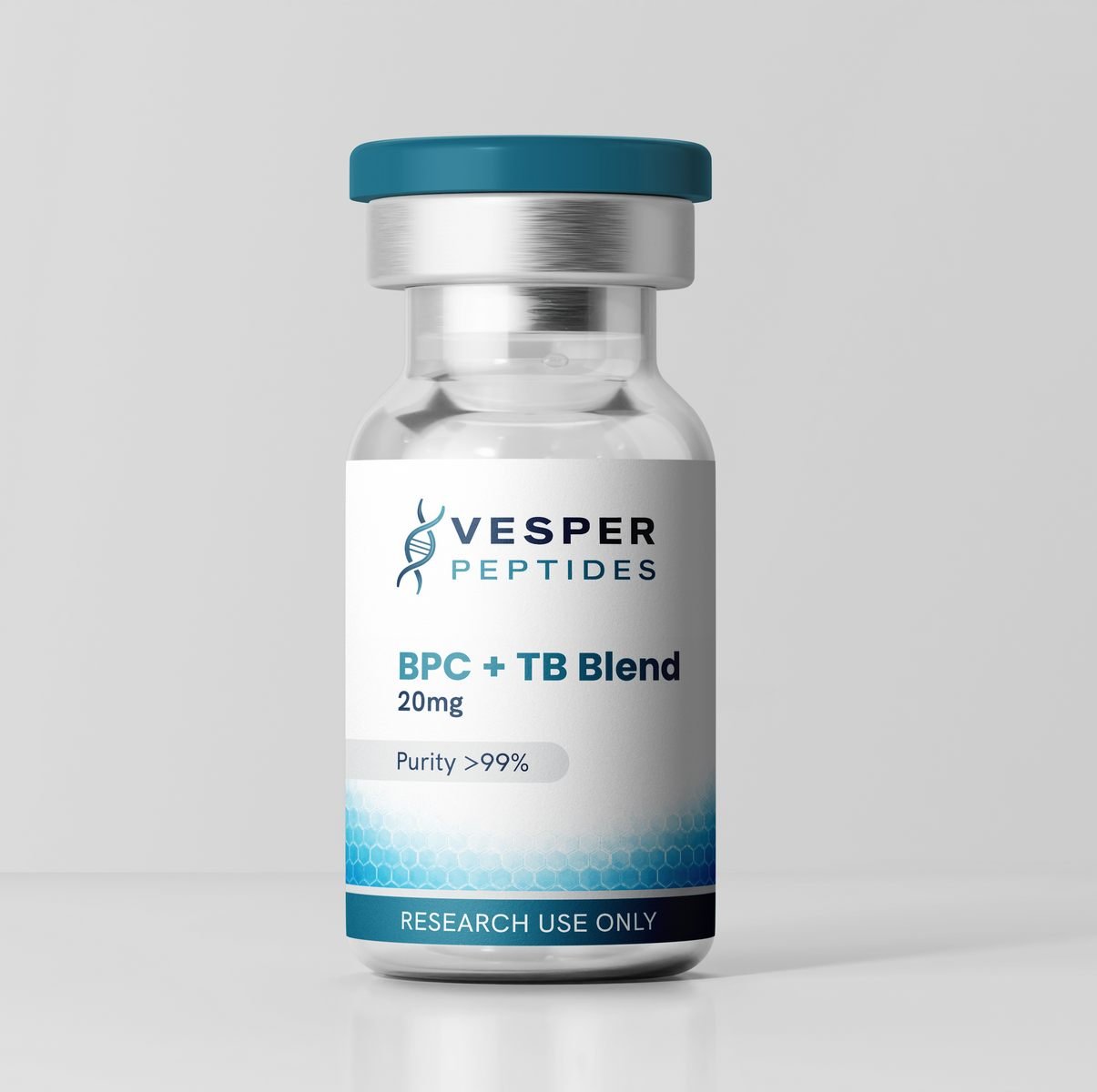
BPC + TB Blend — Dual Cytoprotective BPC-157 & TB-500 Research Peptide
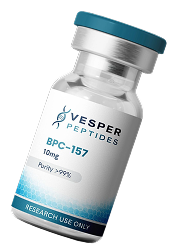
BPC + TB Blend is a research-grade co-formulation that delivers BPC-157 — a multi-pathway cytoprotective pentadecapeptide — and TB-500 — a Thymosin Beta-4 actin-sequestering synthetic fragment — together in a single lyophilized vial. Researchers in regenerative biology, tissue repair science, and preclinical pharmacology use this BPC TB blend research peptide to investigate the combined effects of two mechanistically distinct but complementary repair pathways operating simultaneously in the same experimental system. Furthermore, its pre-formulated design makes it the most practical option for researchers running dual-compound cytoprotective studies without the variability introduced by independent compound preparation.
Dual-Mechanism Repair Rationale
BPC-157 and TB-500 each target distinct nodes in the tissue repair signaling network. BPC-157 drives repair primarily through VEGF upregulation, nitric oxide pathway modulation, and FAK-paxillin pathway activation. TB-500, by contrast, drives repair through G-actin sequestration, PI3K/AKT activation, MMP regulation, and endothelial cell migration promotion. Consequently, these two compounds address complementary and non-overlapping aspects of the repair process.
Together, they activate both the vascular repair axis (BPC-157 via VEGF) and the cytoskeletal and extracellular matrix remodeling axis (TB-500 via actin/AKT). As a result, the combination produces a more comprehensive tissue repair stimulus than either compound achieves independently. Therefore, researchers studying multi-mechanism tissue repair specifically require both compounds in the same experimental system.
Key Research Applications
- Synergistic tissue repair research — Studies examining the additive and synergistic effects of simultaneous BPC-157 and TB-500 signaling on wound healing, angiogenesis, and extracellular matrix remodeling in combined repair models.
- Multi-mechanism cytoprotection research — Investigation of how VEGF-mediated vascular repair and actin/AKT-mediated cellular repair interact and amplify each other in the same experimental system.
- Tendon and musculoskeletal repair — Preclinical models examining the combined effects of BPC-157 and TB-500 on tenocyte and myoblast recruitment, proliferation, and extracellular matrix repair.
- Cardiovascular repair research — Studies pairing BPC-157’s NO-mediated endothelial protection with TB-500’s AKT-driven cardiomyocyte survival signals in ischemia-reperfusion model systems.
- Comparative mono vs. combination research — Experimental designs comparing the BPC + TB Blend against individual BPC-157 and TB-500 compounds to quantify the synergistic contribution of dual-pathway activation.
Peptide Profile
| Parameter | Detail |
|---|---|
| Components | BPC-157 + TB-500 (Thymosin Beta-4 fragment) |
| Key Pathways | VEGF/VEGFR2, FAK-paxillin, NO system, actin sequestration, PI3K/AKT, MMP regulation |
| Form | Lyophilized powder (co-formulated) |
| Purity | ≥98% per component (HPLC verified) |
| Available Size | 20mg |
| Storage | −20°C (lyophilized); 4°C (reconstituted) |
| Reconstitution | Sterile bacteriostatic water |
Reconstitution & Storage
Reconstitute with sterile bacteriostatic water. Both components are freely water-soluble. Add solvent slowly along the vial wall and swirl gently. Store lyophilized vials at −20°C. Once reconstituted, maintain at 4°C and use within 28–30 days. Avoid repeated freeze-thaw cycles to preserve the activity of both peptide components.
For research use only. Not intended for human or veterinary administration.
Reviews
There are no reviews yet.